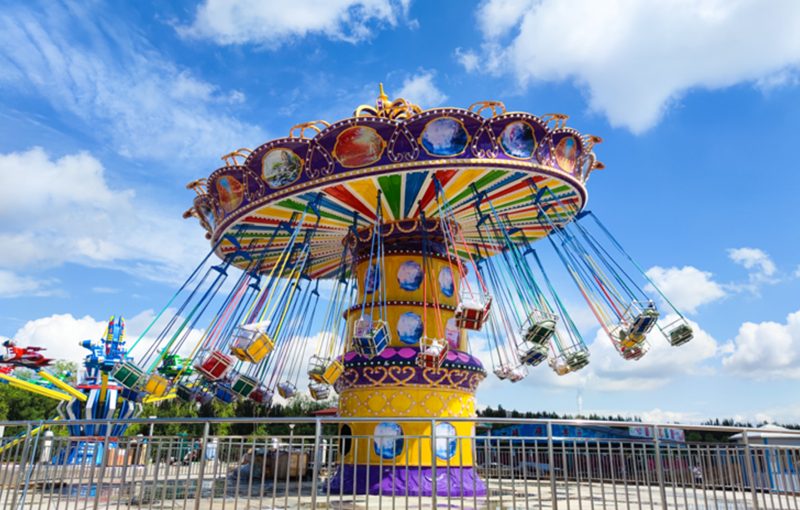
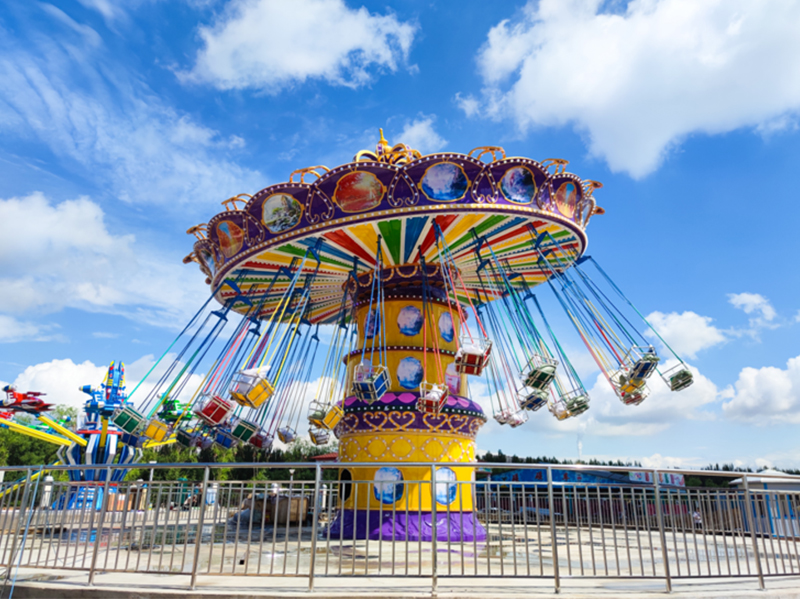
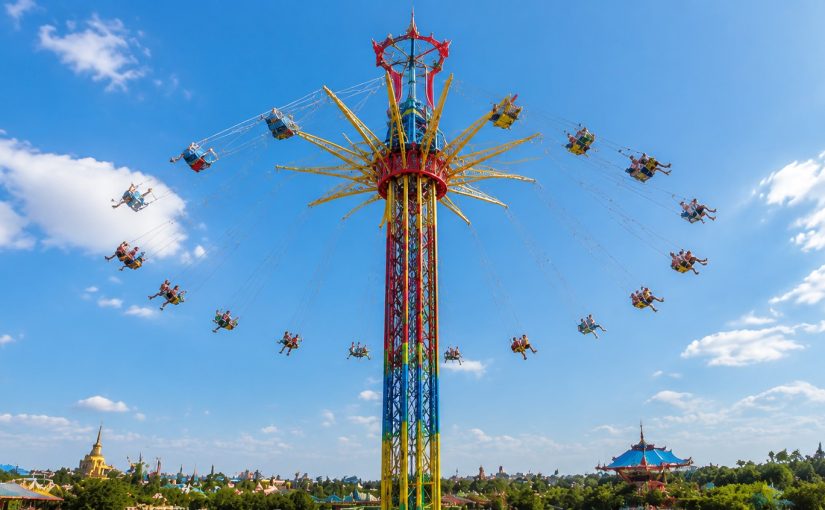
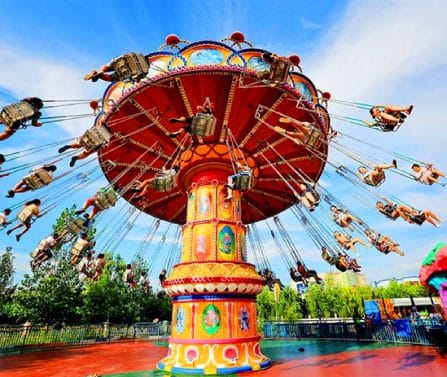
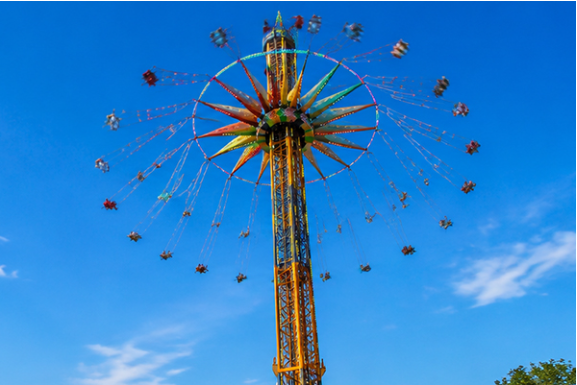
A 42m sky flyer ride for sale is one of the few attractions that a visitor can see from outside the park boundary. The tower rises above the treeline, the seats swing out over the crowd, and people decide whether they want to ride it long before they reach the ticket gate. For an investor, that visibility is part of the return. It is also a reminder that a ride of this height shapes the engineering, the site plan and the operating budget of the whole project, not only its skyline.
This article covers what buyers should confirm before signing a contract for a high-tower swing ride: the technical configuration, what the quoted price does and does not include, the ground and wind conditions the ride demands, the safety documentation to request, and the running costs that begin after installation. Investors who want the equipment specification and current pricing first can open the 42m sky flyer ride for sale page before requesting a quotation.
What a 42m Sky Flyer Ride Actually Is
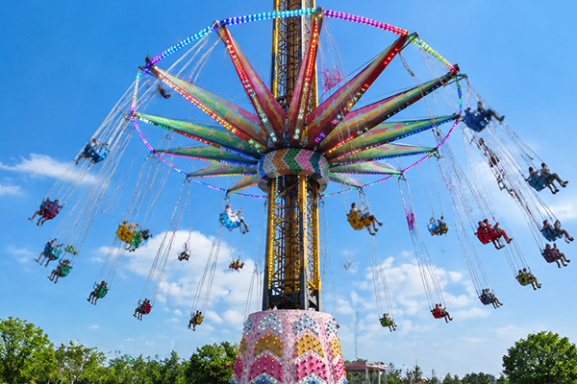
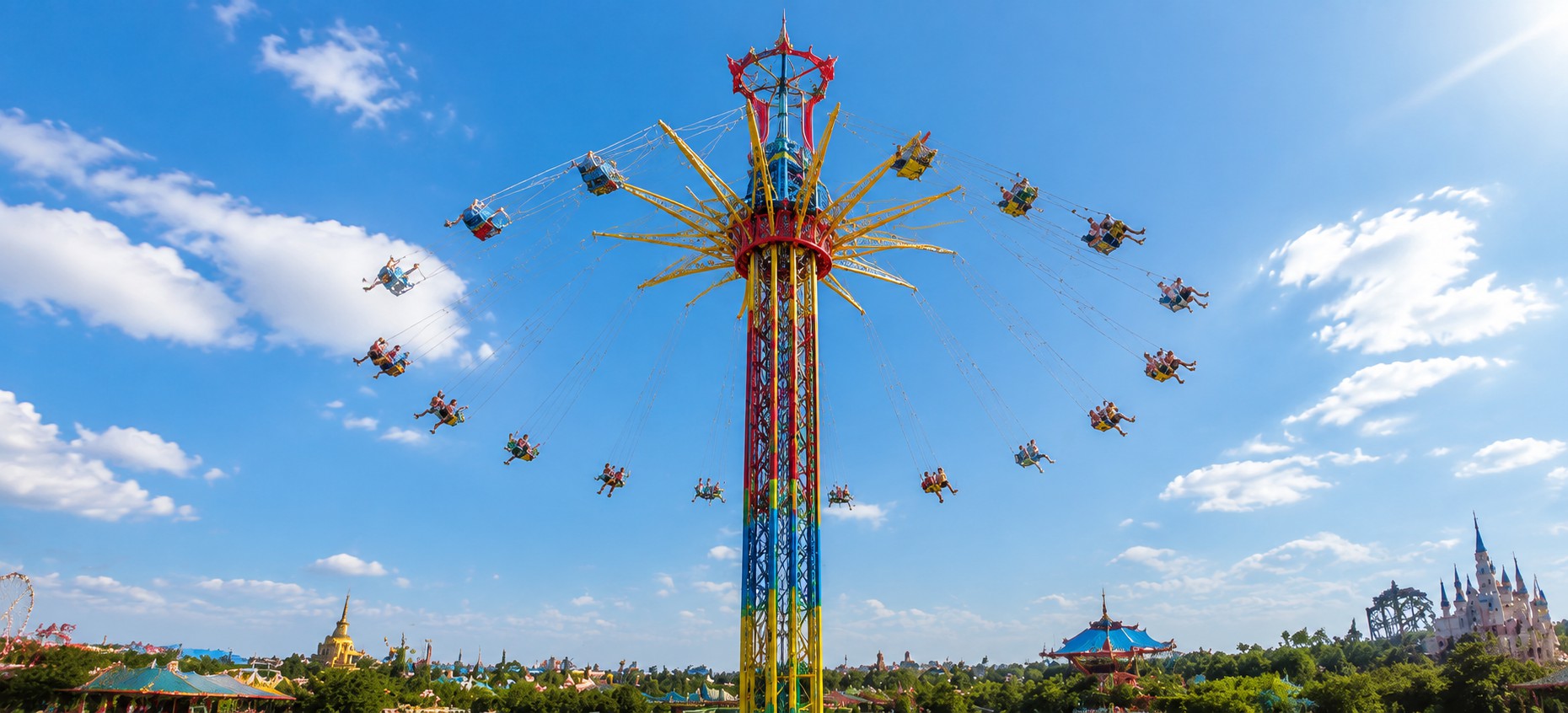
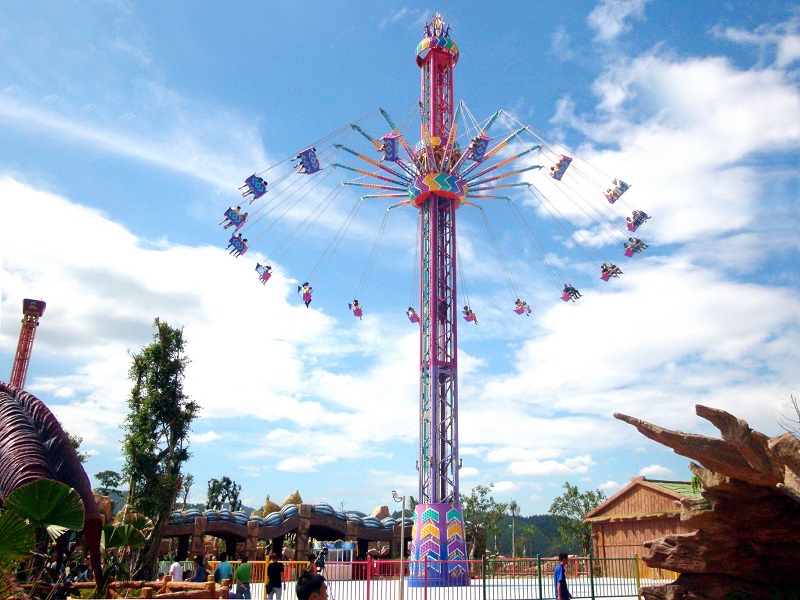
A sky flyer, also sold as a star flyer, flying tower ride or high swing ride, lifts passengers to the top of a central tower, then rotates the gondola and swings the seats outward while the tower descends. The combination of height, rotation and wind is what separates it from an ordinary swing ride, and it is also why the structure, the drive and the restraint system have to be engineered as one machine rather than assembled from separate parts.
The standard 42 m configuration that most parks order is a well-established specification:
- Overall ride height: 42 m
- Maximum operating height: approximately 29.5 m
- Overall diameter: 14.3 m
- Required footprint: 25 m in diameter
- Passenger capacity: 32 seats
- Rated power: approximately 75 kW
Those figures are the starting point for every other decision. They set the size of the plot, the type of foundation, the electrical supply and the crane required on installation day, which is why a 42 m tower cannot be treated as a decorative addition to an existing park layout.
What Determines the Price of a 42m Sky Flyer Ride
A standard star flyer ride from DINIS generally falls between USD 160,000 and USD 185,000. For a 32-seat configuration with LED lighting, the electrical control system, passenger restraints and standard decorative elements, buyers can use roughly USD 170,000 to USD 180,000 as an initial equipment budget.
That budget normally covers the main steel tower, the lifting and rotating structure, the swing arms, the passenger seats, the drive system, the control cabinet, the safety devices, the lighting system and standard surface decoration. It does not usually cover everything the project needs. Export packing, ocean freight, marine insurance, import duties, foundation construction, crane hire, local installation labour and engineer travel are priced separately, and so are third-party inspection and local registration.
This is why two quotations for the same height can differ by tens of thousands of dollars without either supplier being dishonest. A programmable lighting package, a themed tower, custom seat design, a different voltage system, or heavier structural calculations for an exposed site each change the total cost of a sky flyer ride from Dinis just as they change the cost of the same height from any other manufacturer. Buyers get more value from comparing scope line by line than from comparing headline numbers, because steel specification, welding quality, drive components, safety interlocks and after-sales support are exactly the items that are easy to reduce quietly in a cheap offer.
Site, Foundation and Wind Load Requirements
Three site conditions decide whether a tower of this size can be installed where the investor wants it. The first is space. A flying tower ride of this height needs a clear 25 m diameter footprint plus operating clearance, and that area cannot double as a queue line, planting bed or service yard on opening day. The second is the ground. A ride of this height transfers significant vertical and overturning loads, so it requires a designed reinforced-concrete foundation rather than a pavement slab, and the structural engineer needs a geotechnical report for the actual plot. The third is access. Tower sections travel as long, heavy components, and the crane that lifts them needs a route and a standing area that many finished parks no longer have.
Wind is the fourth factor and the one investors most often overlook. Local wind load, gust speed and the exposure of the site influence both the structural design and the maximum operating wind speed written into the ride manual. A coastal project and an inland city project at the same latitude can require different calculations, so the manufacturer needs the project country and site location before the final drawings are issued.
Safety Systems and Documentation to Check
Restraints are the first thing to inspect on any high swing ride. Seats should have redundant locking, a monitored restraint circuit and a means of verifying every lock before the ride is dispatched. Beyond the harness, buyers should confirm that the equipment includes overspeed protection, limit switches at the upper and lower positions, emergency lowering, an interlocked control panel and a wind monitoring system that stops operation when conditions exceed the permitted value.
The paperwork matters as much as the hardware. A serious supplier provides load test records, welding inspection reports, material certificates, electrical schematics and a maintenance schedule, and can support local registration with the drawings and calculations that the authority asks to see. Buyers importing a large ride should confirm the certification requirements of their own market before ordering rather than after the container has been shipped.
Operating Costs and Revenue Potential
Revenue on a tower ride is driven by cycle time and seat count rather than by ticket price alone. With 32 seats and a cycle of roughly three to four minutes including loading and restraint checks, a busy park can carry several hundred passengers an hour, which makes the ride one of the stronger throughput attractions on a mid-size site. The 75 kW drive is modest relative to the income a large sky flyer ride for sale can generate, but electricity is only one line in the operating budget.
The recurring costs are staffing, daily pre-opening checks, restraint inspection and replacement, lubrication of the rotation and lifting mechanism, drive maintenance, lighting repairs and periodic third-party inspection. Because the structure stands outdoors and carries a permanent dynamic load, an annual structural review is normal good practice rather than an optional extra. Parks that plan these costs from the beginning find the investment return easier to predict, and they avoid the situation where a profitable ride is held back by an underfunded maintenance programme.
Where to Start
The most reliable way to buy a tower ride is to fix the site, the passenger capacity and the budget range before the civil works begin, and then to request a quotation that states clearly what is and is not included. Material and fabrication quality deserve the same attention as the headline price: the tower and swing arms are fabricated from steel, and the grade of that steel, together with the galvanising, the weld quality and the inspection records, determines both the service life of the ride and the maintenance bill for the following decade.
Dinis builds and exports tower rides, ferris wheels, swing chairs, pirate ships and complete park equipment packages for amusement parks, resorts and scenic attractions. As a sky flyer ride manufacturer, the company provides technical drawings, foundation load data, packing documentation, shipping support and installation guidance, so that an investor can plan the project with realistic figures instead of estimates. Send the site dimensions, the project country, the local voltage and the target opening date, and Dinis will prepare a configuration and budget proposal for the ride.
Current project reference: https://www.dinisdreammyland.com/products/42-m-sky-flyer-ride-for-sale/