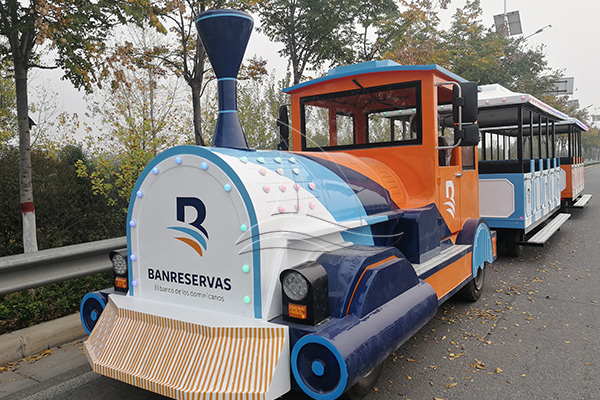
Ordering a diesel trackless train for a site that operates all year is a different exercise from buying a train for a seasonal attraction. Cold starts, wet weeks, continuous duty and a fixed annual maintenance window all have to be settled before the contract, not after delivery. This guide lists what buyers should confirm when buying a diesel trackless train for year-round service.
Confirm the Route Profile and Daily Duty
The manufacturer needs the real route, not a description of the destination. Supply a drawing with lengths, gradients, surface type, turning radii and the position of every stop, together with the number of circuits the timetable requires each day. Add the expected passenger load in the busiest week of the year, because a train specified for average occupancy will be working at its limit exactly when reliability matters most.
Ask for the Performance Figures in Writing
Verbal assurances about climbing ability or fuel use are difficult to enforce later. Request a written performance statement covering the steepest section at full load, the fuel consumption per route and the maximum operating temperature range the vehicle is prepared for. Clarifying year round trackless train operation in the specification protects both parties, and it gives the park’s maintenance team a reference point when they compare recorded fuel use against the quoted figure.
Agree the Specification of Cabins and Carriages
Year-round operation usually means guests ride in rain, wind and cold, so the carriage specification affects whether the train is used at all outside the main season. Confirm the proportion of open, semi-enclosed and fully enclosed cabins, the glazing, the drainage of the roof and the heating or ventilation provided. Reviewing the amusement park train fleet range shows how cabin mix changes both the comfort of the ride and the operating weather window of the attraction.
Confirm Cold, Heat and Wet-Weather Provisions
Ask explicitly how the engine starts in low temperatures, whether a block heater is fitted, what battery capacity is installed and how the electrical system copes with wet conditions. In hot climates the same questions apply to the cooling package, the radiator position and the protection of the driver’s station. These are specification items rather than accessories, and each one should appear in the written offer with its limits stated.
Agree the Maintenance Schedule and Spare Parts
Year-round running compresses the maintenance calendar, so the service intervals, the consumables list and the recommended stock of spare parts should be agreed in advance. A supplier who provides a clear schedule, a parts list and torque figures makes it possible to plan servicing during quiet weekdays instead of waiting for a failure. Reference material on preventive maintenance explains why planned work on wear items costs less than reacting to breakdowns, particularly on vehicles in daily service.
Confirm Training, Documentation and Support
The final points to settle are the ones that determine how quickly the park can help itself. Confirm driver training, the language of the manuals and wiring diagrams, the warranty period, the response time for technical support and the availability of remote diagnosis. A written handover list prevents the common situation in which a park receives a perfectly good train but has no reference documents for the workshop that has to maintain it.
Ordering a diesel trackless train for year-round use is a documentation exercise as much as a purchase. Provide the real route and duty, obtain written performance figures, agree the cabin specification, confirm cold and heat provisions, fix the maintenance schedule and settle training and support. Operators can review the range from Dinis train solutions provider and start from the product page at https://www.dinistrains.com/diesel-trackless-train-for-sale/.