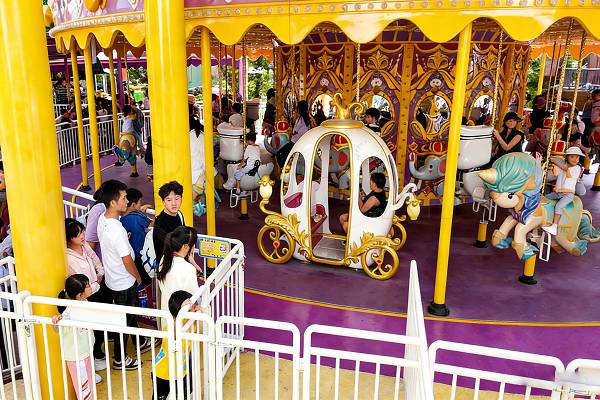
How Should a 92-Seat Double Decker Merry Go Round Be Staffed for Peak Mall Traffic?

A 92-seat carousel can clear a queue quickly, but only if the staff can load both decks at the busiest hour without losing control of the platform. Peak mall traffic is the test. This guide explains how to plan 92 seat carousel staffing for that situation.
92 seat carousel staffing

Map the Platform and the Stairs

Draw every position an attendant must cover: the gate, the lower deck, the stairs, the upper deck, the exit and the control console. A large carousel needs a clear view of each. Walk the route with a full platform and time how long it takes one attendant to cross from the gate to the far side of the upper deck. If one person cannot see the upper platform from the console, that deck needs its own attendant, and the staffing plan must reflect it.

Assign Fixed Roles

During peak periods, the team should have a gate attendant, a lower-deck attendant, an upper-deck attendant and an operator. Each role has a fixed sequence: checking tickets, counting seats, checking restraints, clearing the platform and signalling the start. A double decker carousel platform team that rehearses those steps loads faster than one that improvises.

Stagger the Boarding of Both Decks

Releasing both decks at the same moment can create a crowd at the stairs. Stagger the release so that the lower deck fills first, then the upper deck, and keep the stairs clear for guests coming down. The sequence should be written down and practised before the busy season, not discovered on a Saturday afternoon.

Control the Queue Outside the Platform

A large carousel can attract a long queue, and that queue must not block the mall’s circulation. Use a defined waiting area with a gate that can be closed when the platform is full. The gate attendant becomes the person who controls the flow, which protects the platform team from a crowd pressing forward.

Plan Breaks and Rotation

Peak staffing is tiring. Plan short rotations between the gate, the decks and the console so that no one stands in the same position for hours. Keep a written rota by the control console so the team knows when the next rotation begins. Reviewing a 68 people carousel with two decks shows how a slightly smaller machine organises the same roles, and general material on carousel operations and staffing explains why the platform is the constraint in most carousel projects.

Prepare for Emergencies

Finally, make sure every attendant knows how to stop the ride, how to clear each deck and how to evacuate the upper platform. Assign one person to lead the evacuation and another to assist guests on the stairs. The staffing plan is complete only when the emergency roles are as clear as the loading roles.

A 92-seat carousel needs a mapped platform, fixed roles, staggered boarding, a controlled queue, planned rotations and clear emergency responsibilities. Staff it for the peak, then test the routine before the mall’s busiest days. Operators can review the range from Carousel Manufacturer mall operations team and open the product page at https://www.carouselmanufacturer.com/product/92-seats-luxurious-double-decker-merry-go-round/.
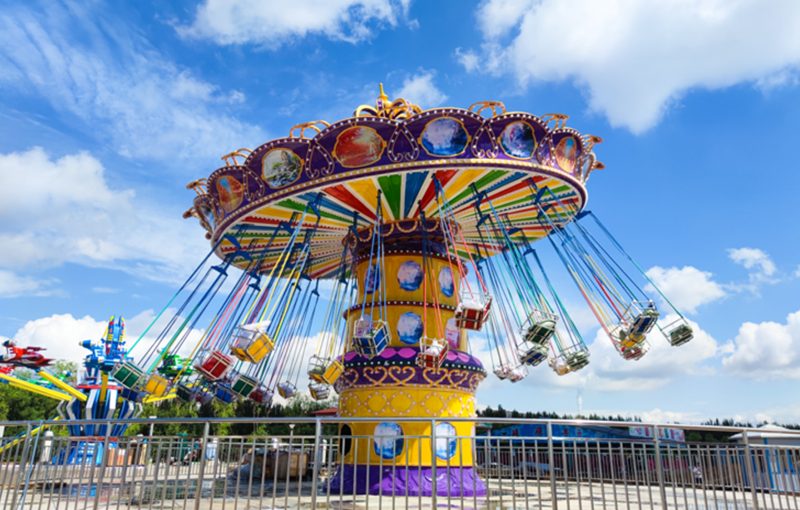
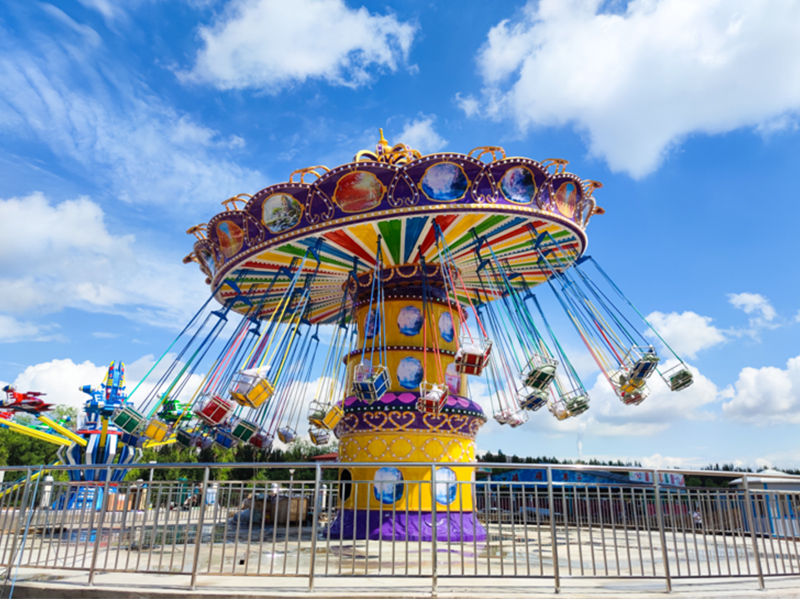
When Does a 36-Person Wave Swinger Ride Suit a Park With Limited Ride Space?

A park with a narrow site often assumes that a high-capacity swing ride is out of reach, because the machines look large in photographs. In practice, the deciding measurement is the clear area around the rotating structure, not the base plate alone. This guide explains when a 36 person wave swinger ride for small parks is the right fit.

36 person wave swinger ride for small parks

Measure the Clear Circle, Not the Base

The ride sweeps a circle as the chairs rise, and that circle is what must fit between the fence, the buildings and the neighbouring attractions. Measure the clear diameter the manufacturer specifies, add the clearance required for the fence and the service route, then compare it with the site. A plot that looks too small for the platform may still accept the ride if the clear circle is drawn correctly on the plan.

Check the Height and Airspace

Limited ground space often means the site is surrounded by trees, lighting masts or buildings, so the vertical envelope matters as much as the footprint. Confirm the maximum height of the ride and the space needed for maintenance access above the platform. Where the site is enclosed, a lower model may suit better even if it carries fewer passengers per cycle.

Plan the Queue Outside the Sweep

A compact site leaves little room for a long queue, and a queue that intrudes into the ride’s safety area is not acceptable. Design the waiting line to sit outside the clear circle, with an overflow route that can be opened on busy days. A space saving wave swinger ride arrangement works best when the entrance and exit are on opposite sides of the platform, so that two groups never meet in the same narrow area.

Compare Capacity per Square Metre

The commercial case for a large swing ride on a small site rests on capacity per square metre. Thirty-six seats per cycle, run on a short programme with a disciplined loading routine, can outperform two smaller rides that occupy the same total area. Calculate guests per hour for the actual cycle time, then compare it with the alternatives rather than with the catalogue seat count alone.

Confirm Power and Foundations

A larger swing ride needs a suitable power supply and a foundation designed for the dynamic loads of the rotating structure. Check the connected load, the anchor details and the drainage around the base, and confirm that the delivery and erection equipment can reach the site. Reviewing the layout of an ocean themed swing ship attraction shows how another swing ride manages clearance and access on a comparable plot.

Weigh the Ride Against the Site Plan

Finally, check that the new ride does not block a walkway, a fire route or a future expansion. A high-capacity attraction that traps guests in a corner is worse than a smaller ride in a better position. The motion and clearance of the ride are described in general material on swing ride design, and understanding them helps the park test the layout before the foundation is poured.

A 36-person wave swinger suits a limited site when the clear circle fits, the height is acceptable, the queue stays outside the sweep, capacity per square metre is strong and the power and foundations are confirmed. Measure the site properly and choose the position before the model. Operators can review the range with ThemeParkProjects ride space planning and start from the product page at https://themeparkprojects.com/36-people-wave-swinger-ride/.

What Should Buyers Confirm with a Manufacturer Before Ordering a Diesel Trackless Train for Year-Round Operation?

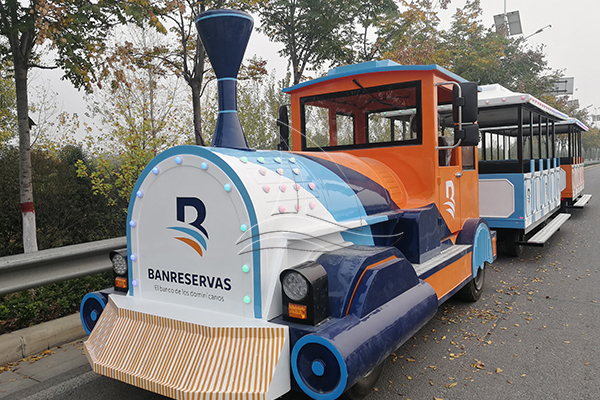
Ordering a diesel trackless train for a site that operates all year is a different exercise from buying a train for a seasonal attraction. Cold starts, wet weeks, continuous duty and a fixed annual maintenance window all have to be settled before the contract, not after delivery. This guide lists what buyers should confirm when buying a diesel trackless train for year-round service.

buying a diesel trackless train

Confirm the Route Profile and Daily Duty

The manufacturer needs the real route, not a description of the destination. Supply a drawing with lengths, gradients, surface type, turning radii and the position of every stop, together with the number of circuits the timetable requires each day. Add the expected passenger load in the busiest week of the year, because a train specified for average occupancy will be working at its limit exactly when reliability matters most.

Ask for the Performance Figures in Writing

Verbal assurances about climbing ability or fuel use are difficult to enforce later. Request a written performance statement covering the steepest section at full load, the fuel consumption per route and the maximum operating temperature range the vehicle is prepared for. Clarifying year round trackless train operation in the specification protects both parties, and it gives the park’s maintenance team a reference point when they compare recorded fuel use against the quoted figure.

Agree the Specification of Cabins and Carriages

Year-round operation usually means guests ride in rain, wind and cold, so the carriage specification affects whether the train is used at all outside the main season. Confirm the proportion of open, semi-enclosed and fully enclosed cabins, the glazing, the drainage of the roof and the heating or ventilation provided. Reviewing the amusement park train fleet range shows how cabin mix changes both the comfort of the ride and the operating weather window of the attraction.

Confirm Cold, Heat and Wet-Weather Provisions

Ask explicitly how the engine starts in low temperatures, whether a block heater is fitted, what battery capacity is installed and how the electrical system copes with wet conditions. In hot climates the same questions apply to the cooling package, the radiator position and the protection of the driver’s station. These are specification items rather than accessories, and each one should appear in the written offer with its limits stated.

Agree the Maintenance Schedule and Spare Parts

Year-round running compresses the maintenance calendar, so the service intervals, the consumables list and the recommended stock of spare parts should be agreed in advance. A supplier who provides a clear schedule, a parts list and torque figures makes it possible to plan servicing during quiet weekdays instead of waiting for a failure. Reference material on preventive maintenance explains why planned work on wear items costs less than reacting to breakdowns, particularly on vehicles in daily service.

Confirm Training, Documentation and Support

The final points to settle are the ones that determine how quickly the park can help itself. Confirm driver training, the language of the manuals and wiring diagrams, the warranty period, the response time for technical support and the availability of remote diagnosis. A written handover list prevents the common situation in which a park receives a perfectly good train but has no reference documents for the workshop that has to maintain it.

Ordering a diesel trackless train for year-round use is a documentation exercise as much as a purchase. Provide the real route and duty, obtain written performance figures, agree the cabin specification, confirm cold and heat provisions, fix the maintenance schedule and settle training and support. Operators can review the range from Dinis train solutions provider and start from the product page at https://www.dinistrains.com/diesel-trackless-train-for-sale/.

When Is a Diesel Trackless Train Better Than a Battery Train for a Large Outdoor Park?

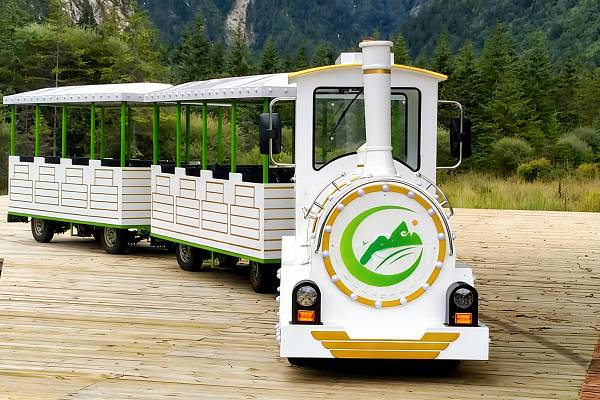
Battery trackless trains are quieter and cleaner, and in most parks they are the right answer. Diesel still wins in a specific set of circumstances: long routes, heavy loads, steep gradients, limited charging infrastructure and days that run from early morning until late at night. This guide explains when a diesel trackless train for large parks is the better choice for a large outdoor site, and what to check before ordering.

diesel trackless train for large parks

Measure the Daily Duty Cycle First

Write down the route length, the number of stops, the gradients and the hours the train will run. A large outdoor park with a five-kilometre circuit and eight boarding points draws far more energy than a compact zoo loop, and the difference decides whether a battery pack can complete the day with a mid-day charge or whether the park would need a second train to cover the gap. Diesel removes that constraint because refuelling takes minutes rather than hours.

When the Route Is Long and Exposed

Long routes across open ground expose the fleet to wind, sun and rain, and a large outdoor park often wants enclosed or semi-enclosed carriages that add weight. Weight reduces range. Diesel trains handle that combination without a redesign, and a model such as a forty-seat diesel trackless train for resorts shows how much seating can be carried on a single unit when the power source is not the limiting factor.

When Charging Infrastructure Is Limited

Battery operation is only as good as the charging regime behind it. If the park has no suitable power supply at the depot, no covered charging bay and no technician available to manage battery health, a battery fleet will disappoint in its second season. Diesel avoids that investment, needing only a compliant fuel store, a safe refuelling point away from guests and a maintenance regime the park can staff today. Compare the available trackless train models against the infrastructure you can realistically build.

Noise, Emissions and Guest Zones

Diesel brings noise and exhaust, which matters more in animal enclosures, indoor areas and quiet gardens than on an open route through a large park. Map the route against the zones where guests stop to listen or watch, and choose the stopping points so that engines idle away from those areas. Modern diesel locomotive design has reduced both noise and emissions considerably, but the park still has to plan refuelling, ventilation and driver procedure around them.

Operating Cost and Servicing

Compare five-year costs rather than purchase prices. Diesel requires fuel, oil and filter servicing, while battery fleets require electricity, pack replacement and more careful handling. On routes where a battery train cannot complete the day, the true comparison is between diesel and a larger battery fleet with spare units, and diesel usually wins on both capital and labour in that scenario. A diesel trackless train for sale should be evaluated with a written servicing plan covering intervals, spare parts and the skill level of your workshop.

Ordering the Right Configuration

Finally, specify the train for the park rather than for the catalogue. Ask about engine size, towing capacity, carriage mix, canopy options and braking for gradients, and request a commissioning plan. Where a park expects to grow, a supplier such as Dinis diesel train company can advise on a configuration that can be extended later without replacing the locomotive.

Diesel is the right choice when the route is long, the loads are heavy, the operating day is long and the charging infrastructure is not realistic. Measure the duty cycle, review the route, check the zones where noise matters, compare the five-year cost and specify the configuration properly. The models are listed at https://www.dinistrains.com/diesel-trackless-train-for-sale/.

How Much Land Do You Really Need for a 4-Loop Roller Coaster Project?

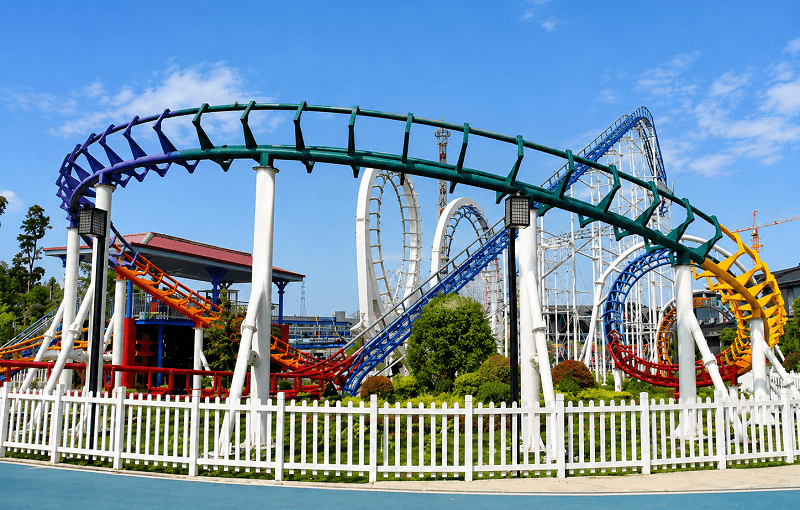
Land is often the largest constraint in a coaster project, and operators frequently underestimate how much space a four-inversion ride really needs. The track footprint is only one part of the equation: queues, stations, safety envelopes, maintenance access, and landscaping all consume area around it. This guide explains how to calculate the land required for a 4-loop roller coaster, and where planners usually go wrong.

land required for a 4-loop roller coaster

Start with the Track Footprint

Ask the manufacturer for the exact plan dimensions of the layout you are considering, including the support column positions. A compact four-loop coaster typically occupies a plot of roughly one hectare or less for the track itself, but that figure assumes a rectangular, clear site. Slopes, existing trees, and utilities can easily double the effective area required, which is why the plot must be surveyed before the design is frozen.

Add the Safety Envelope and Clearances

Every coaster has a dynamic envelope that must remain free of structures and guest areas, plus minimum clearances for maintenance and evacuation. These zones can add several metres to each side of the layout and must be considered part of the project area, not spare space. Careful roller coaster site planning treats the envelope as a hard boundary that also determines where paths, fences, and landscaping may be placed.

Station, Queue, and Back-of-House Areas

The station building, queue, and dispatch area are often overlooked. A busy coaster needs a queue capable of holding an hour of demand, a covered station with two-sided loading where possible, and a separate exit that does not cross the entrance. Behind the scenes, allow space for maintenance access, a transfer track, spare parts storage, and staff facilities. Together these elements can occupy as much land as the ride itself.

Compare with Larger Layouts Before Committing

It is worth comparing what additional inversions would cost in area. A six loop roller coaster requires a longer layout, higher structures, and a larger safety zone, which may push the project onto a bigger plot of land or require a different site altogether. Plotting both options on the same survey shows immediately whether the extra thrills are feasible.

Plan for Guest Flow and Landscaping

Coasters attract crowds, so paths around the ride must be wider than the park average. Plan viewing areas, photo points, and landscaping that frames the structure without blocking sight lines or intruding into the envelope. These elements make the attraction feel integrated rather than dropped onto a vacant plot, and they influence how much land must be reserved around the track.

Do Not Forget Expansion and Utilities

Leave room for future development, whether that means a second train, an additional brake run, or a neighbouring attraction. Also check the routes for power, drainage, and service vehicles: these services must reach the ride without crossing guest areas, and rerouting them after construction is expensive. A site plan with clear utility corridors prevents hidden costs later.

For most parks, a four-loop coaster needs a plot large enough for the track, the full safety envelope, a substantial station and queue, and service access. Work with an experienced Dinis coaster factory that can supply accurate layouts for your site, and review the fundamentals of roller coaster construction to understand structural and clearance requirements. To compare models and request a site assessment, visit https://themeparkprojects.com/4-loop-roller-coaster-for-sale/.