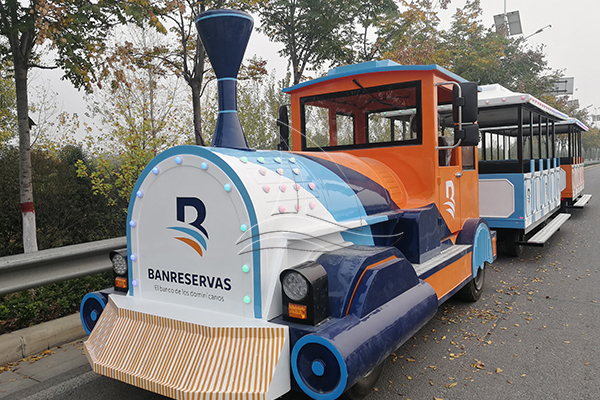
What Should Buyers Confirm with a Manufacturer Before Ordering a Diesel Trackless Train for Year-Round Operation?

Ordering a diesel trackless train for a site that operates all year is a different exercise from buying a train for a seasonal attraction. Cold starts, wet weeks, continuous duty and a fixed annual maintenance window all have to be settled before the contract, not after delivery. This guide lists what buyers should confirm when buying a diesel trackless train for year-round service.
buying a diesel trackless train

Confirm the Route Profile and Daily Duty

The manufacturer needs the real route, not a description of the destination. Supply a drawing with lengths, gradients, surface type, turning radii and the position of every stop, together with the number of circuits the timetable requires each day. Add the expected passenger load in the busiest week of the year, because a train specified for average occupancy will be working at its limit exactly when reliability matters most.

Ask for the Performance Figures in Writing

Verbal assurances about climbing ability or fuel use are difficult to enforce later. Request a written performance statement covering the steepest section at full load, the fuel consumption per route and the maximum operating temperature range the vehicle is prepared for. Clarifying year round trackless train operation in the specification protects both parties, and it gives the park’s maintenance team a reference point when they compare recorded fuel use against the quoted figure.

Agree the Specification of Cabins and Carriages

Year-round operation usually means guests ride in rain, wind and cold, so the carriage specification affects whether the train is used at all outside the main season. Confirm the proportion of open, semi-enclosed and fully enclosed cabins, the glazing, the drainage of the roof and the heating or ventilation provided. Reviewing the amusement park train fleet range shows how cabin mix changes both the comfort of the ride and the operating weather window of the attraction.

Confirm Cold, Heat and Wet-Weather Provisions

Ask explicitly how the engine starts in low temperatures, whether a block heater is fitted, what battery capacity is installed and how the electrical system copes with wet conditions. In hot climates the same questions apply to the cooling package, the radiator position and the protection of the driver’s station. These are specification items rather than accessories, and each one should appear in the written offer with its limits stated.

Agree the Maintenance Schedule and Spare Parts

Year-round running compresses the maintenance calendar, so the service intervals, the consumables list and the recommended stock of spare parts should be agreed in advance. A supplier who provides a clear schedule, a parts list and torque figures makes it possible to plan servicing during quiet weekdays instead of waiting for a failure. Reference material on preventive maintenance explains why planned work on wear items costs less than reacting to breakdowns, particularly on vehicles in daily service.

Confirm Training, Documentation and Support

The final points to settle are the ones that determine how quickly the park can help itself. Confirm driver training, the language of the manuals and wiring diagrams, the warranty period, the response time for technical support and the availability of remote diagnosis. A written handover list prevents the common situation in which a park receives a perfectly good train but has no reference documents for the workshop that has to maintain it.

Ordering a diesel trackless train for year-round use is a documentation exercise as much as a purchase. Provide the real route and duty, obtain written performance figures, agree the cabin specification, confirm cold and heat provisions, fix the maintenance schedule and settle training and support. Operators can review the range from Dinis train solutions provider and start from the product page at https://www.dinistrains.com/diesel-trackless-train-for-sale/.
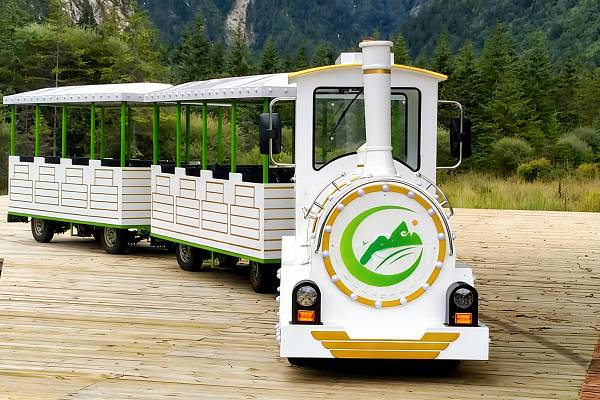
When Is a Diesel Trackless Train Better Than a Battery Train for a Large Outdoor Park?

Battery trackless trains are quieter and cleaner, and in most parks they are the right answer. Diesel still wins in a specific set of circumstances: long routes, heavy loads, steep gradients, limited charging infrastructure and days that run from early morning until late at night. This guide explains when a diesel trackless train for large parks is the better choice for a large outdoor site, and what to check before ordering.

diesel trackless train for large parks

Measure the Daily Duty Cycle First

Write down the route length, the number of stops, the gradients and the hours the train will run. A large outdoor park with a five-kilometre circuit and eight boarding points draws far more energy than a compact zoo loop, and the difference decides whether a battery pack can complete the day with a mid-day charge or whether the park would need a second train to cover the gap. Diesel removes that constraint because refuelling takes minutes rather than hours.

When the Route Is Long and Exposed

Long routes across open ground expose the fleet to wind, sun and rain, and a large outdoor park often wants enclosed or semi-enclosed carriages that add weight. Weight reduces range. Diesel trains handle that combination without a redesign, and a model such as a forty-seat diesel trackless train for resorts shows how much seating can be carried on a single unit when the power source is not the limiting factor.

When Charging Infrastructure Is Limited

Battery operation is only as good as the charging regime behind it. If the park has no suitable power supply at the depot, no covered charging bay and no technician available to manage battery health, a battery fleet will disappoint in its second season. Diesel avoids that investment, needing only a compliant fuel store, a safe refuelling point away from guests and a maintenance regime the park can staff today. Compare the available trackless train models against the infrastructure you can realistically build.

Noise, Emissions and Guest Zones

Diesel brings noise and exhaust, which matters more in animal enclosures, indoor areas and quiet gardens than on an open route through a large park. Map the route against the zones where guests stop to listen or watch, and choose the stopping points so that engines idle away from those areas. Modern diesel locomotive design has reduced both noise and emissions considerably, but the park still has to plan refuelling, ventilation and driver procedure around them.

Operating Cost and Servicing

Compare five-year costs rather than purchase prices. Diesel requires fuel, oil and filter servicing, while battery fleets require electricity, pack replacement and more careful handling. On routes where a battery train cannot complete the day, the true comparison is between diesel and a larger battery fleet with spare units, and diesel usually wins on both capital and labour in that scenario. A diesel trackless train for sale should be evaluated with a written servicing plan covering intervals, spare parts and the skill level of your workshop.

Ordering the Right Configuration

Finally, specify the train for the park rather than for the catalogue. Ask about engine size, towing capacity, carriage mix, canopy options and braking for gradients, and request a commissioning plan. Where a park expects to grow, a supplier such as Dinis diesel train company can advise on a configuration that can be extended later without replacing the locomotive.

Diesel is the right choice when the route is long, the loads are heavy, the operating day is long and the charging infrastructure is not realistic. Measure the duty cycle, review the route, check the zones where noise matters, compare the five-year cost and specify the configuration properly. The models are listed at https://www.dinistrains.com/diesel-trackless-train-for-sale/.