Small and medium parks face a specific problem: they need a coaster that feels substantial enough to attract visitors, but not so large that it consumes the capital budget or the site. The shortlist almost always comes down to three families of ride, and the choice between them decides the park economy for the next decade.
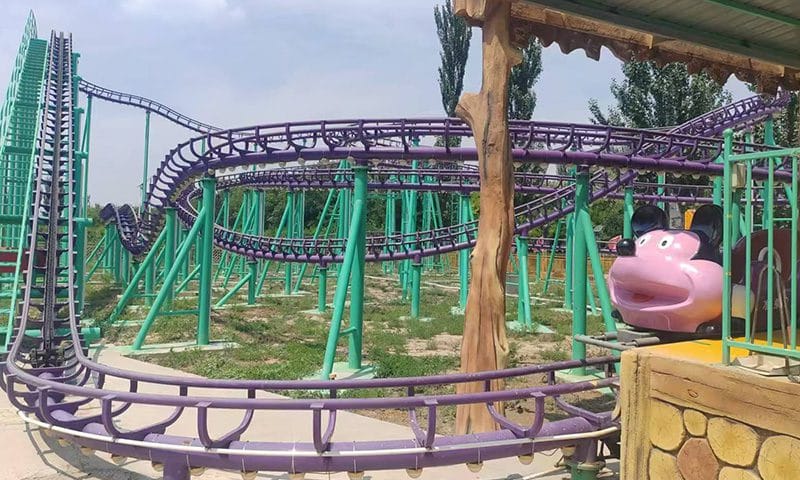
Here is how the options compare, and why a theme park wild mouse coaster for sale usually wins the business case for parks under roughly 20,000 m².
The Shortlist
| Ride family | Footprint | Thrill | Best for |
|---|---|---|---|
| Wild mouse coaster | 800 – 1,200 m² | Medium – high | Urban and family parks |
| Powered family coaster | 1,000 – 2,500 m² | Low – medium | Young families, indoor sites |
| Family launch coaster | 1,500 – 3,000 m² | Medium | Growth parks with land |
The table explains the pattern: the wild mouse offers the highest thrill per square metre and per dollar, which is exactly what a constrained site needs.
Why the Wild Mouse Wins on Business Case
Capital efficiency
A standard single-train layout with 180 to 220 metres of track is the cheapest way to add a genuine coaster. Site works, station and installation add 20 to 35 percent depending on location, but the total still sits well below a launch coaster.
Throughput that fits the park
The wild mouse coaster throughput matters more than headline speed. A single train dispatching every 50 to 60 seconds carries roughly 700 to 850 guests per hour – enough for a small park at peak without building capacity it will never use.
Appeal across the family
Height restrictions usually start around 120 cm, which brings in older children, teenagers and adults. That is a broader catchment than a theme park family coaster aimed purely at younger riders, and it keeps the ride relevant as the audience ages.
Space and Installation
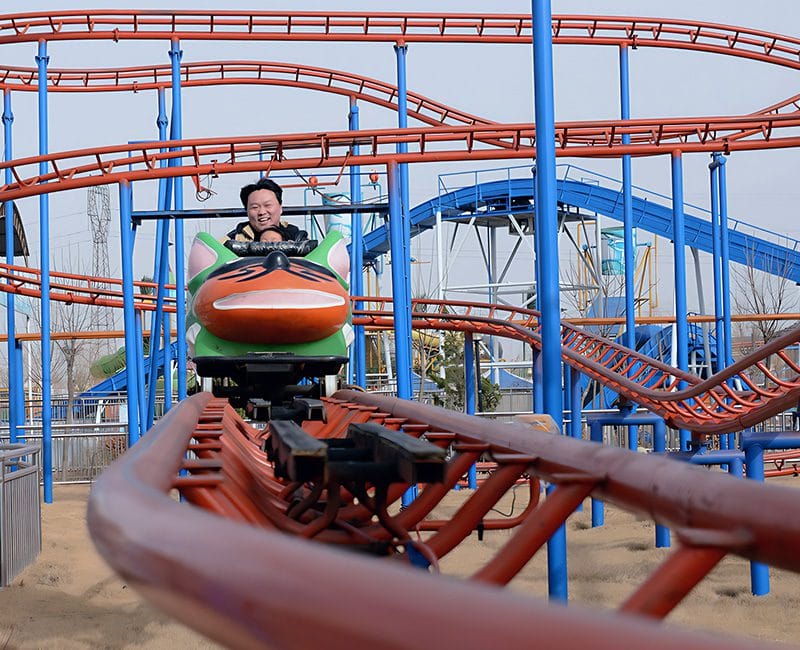
Plan a fenced envelope of roughly 20 by 40 metres including the station, queue and maintenance access. Check clear height with local planning, and commission a geotechnical report before foundations are designed. Track and supports are fabricated from Structural steel with galvanised protection, and the structure must be anchored to a foundation designed for the dynamic loads of a loaded train.
Operating Cost
- No launch system and no show effects to maintain
- Two operators per shift at typical throughput
- Daily restraint, brake and wheel checks
- Annual track inspection and weld testing
Those four lines are why a wild mouse can stay open on quiet weekdays when a larger coaster cannot.
How to Compare Offers
Two quotes that differ by 20 percent are usually different rides: track length, train count, control system or installation supervision. Normalise all four before comparing price. For a detailed specification walk-through, see the full guide.
Indoor or Outdoor?
An outdoor wild mouse suits parks with reliable weather and enough land for a fenced envelope. It is cheaper to build, easier to maintain and reads as a landmark from the road. An indoor installation costs more because the building must carry the foundation loads and the ceiling height, but it protects revenue during rainy or cold seasons.
For a small park in a temperate climate, the practical compromise is an outdoor coaster with a covered station and a themed queue, which keeps the ride operating through light rain without the cost of enclosing the circuit.
Payback and Financing
Most operators model payback over three to five operating seasons. The calculation needs three inputs: the additional visits the ride generates, the average secondary spend those visitors produce inside the park, and the annual operating and maintenance cost of the ride itself. A coaster that adds 15,000 visits a year and lifts food and beverage spend pays back comfortably within that window.
Financing matters as much as price. A standard layout can often be delivered in 60 to 90 days, which means the ride can be ordered after the season ends and installed before the next one begins – avoiding a full year of idle capital. If your bank requires a fixed delivery date, order early enough to absorb a shipping delay rather than paying for an empty site.
What Buyers Should Ask the Manufacturer
Before signing, ask for the design standard the structure is calculated to, the number of trains the station can accept, the spare parts list and the name of the engineer who will supervise installation. Suppliers who answer those questions quickly are usually the ones whose ride is still running smoothly in year five. If the answers are vague, the price is not the issue – the scope is.
Frequently Asked Questions
Is a wild mouse safe for children?
It is designed for riders above the manufacturer height limit, typically around 120 cm. Younger children should ride a family or kiddie coaster instead.
How long does installation take?
Foundations two to four weeks, erection three to five weeks, then commissioning and testing. Production is usually 60 to 90 days for a standard layout.
Can a small park add a second train later?
Yes, if the station and brake run are designed for it from the start. Retrofitting is significantly more expensive.
Next Step
Send us your site dimensions and expected attendance, and we will model the layout and throughput. Our wild mouse coaster projects by Dinis team can supply drawings, documentation and installation supervision, and as a theme park ride supplier we publish the full scope before the contract so the comparison is like for like.