How Much Does It Cost to Operate a Wild Mouse Roller Coaster Each Year?

Most buyers focus on the purchase price and forget the annual operating cost. Over ten years, operating a wild mouse coaster can cost as much as the ride itself – and that decides whether it is a good investment.

This article breaks down the annual operating cost of a Theme park wild mouse roller coaster for sale and explains how to plan for it.
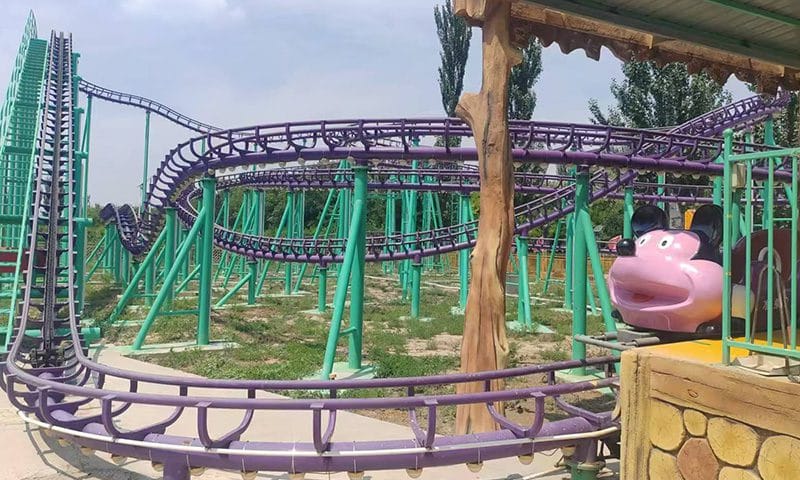
wild mouse coaster in operation

What Annual Operating Cost Includes

  • Operator and supervisor wages
  • Electricity for the lift, brakes and lighting
  • Routine maintenance and inspections
  • Spare parts and consumables
  • Insurance
  • Marketing and promotions

Typical Cost Structure

Line Typical share
Staffing 35 – 50%
Maintenance and inspections 15 – 25%
Energy 10 – 20%
Insurance 5 – 10%
Spare parts and consumables 5 – 10%
Marketing 5 – 10%

A small park running one train usually spends a few percent of the ride value each year on maintenance, plus staffing and energy. Larger parks with two trains and longer operating hours spend more.
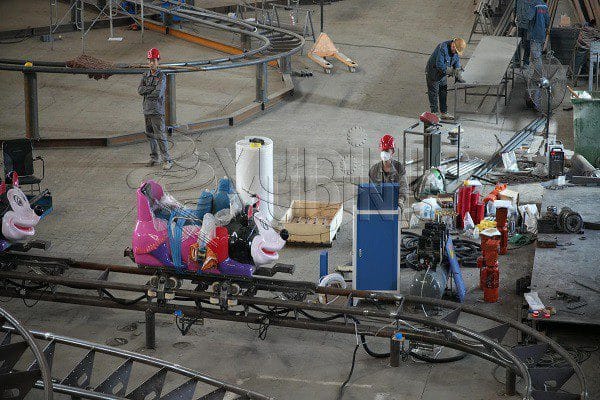
wild mouse coaster station and operators

Staffing

A wild mouse needs at least two operators per shift at normal throughput: one at the station and one at the entrance. Peak days may need a third for the queue. Staff costs dominate because they are paid every operating hour, regardless of how many guests ride.

Training reduces cost indirectly: trained operators dispatch faster, which raises capacity without adding staff.

Energy

The lift motor is the main consumer, followed by lighting and the control system. Energy use is relatively predictable and scales with operating hours. Running the ride only when demand justifies it is the simplest way to control this line.

Maintenance and Spares

Daily checks, weekly inspections and annual non-destructive testing are non-negotiable. The wild mouse roller coaster installation should include these intervals and the expected life of wear parts such as wheels, brake pads and chain components.

Track and support structures are fabricated from Structural steel with galvanised protection, and those components set the inspection schedule. Knowing the material specification helps you plan the annual maintenance budget accurately.

Keep a first-year spare kit: lamps, fuses, contactors, brake components and restraint parts. Downtime is more expensive than spares.

Utilization and Revenue

Operating cost is fixed; revenue is variable. A coaster that runs at 60 percent utilization pays its costs far more easily than one at 25 percent. The business case should model off-peak days, not just weekends.

Consider promotional days, school groups and community events to lift midweek utilization. The wild mouse roller coaster project improves with every additional rider once the fixed costs are covered.

wild mouse coaster at a family park

Reducing Operating Cost

  1. Schedule operating hours around demand
  2. Train operators to dispatch efficiently
  3. Keep to the maintenance schedule to avoid emergency repairs
  4. Buy consumables in advance
  5. Review energy use monthly

Budgeting the Annual Cost

Build the operating budget from the same structure every year: staffing hours, energy consumption, maintenance schedule, spares, insurance and marketing. Then compare the total to the ride’s contribution. A ride that looks profitable on ticket revenue alone can be marginal once staffing and maintenance are counted.

Keep the budget in a spreadsheet with a line per cost category and a monthly actual column. The pattern of overspend becomes visible quickly, and it is usually in staffing or emergency repairs.

How Utilization Changes the Numbers

At 60 percent utilization, the fixed operating cost is spread over far more riders than at 25 percent. That is why marketing and off-peak promotions matter: they do not reduce cost, but they increase the revenue that the same cost supports.

A simple rule is to cover fixed operating cost from weekday business and treat weekend revenue as contribution. Parks that plan this way survive quiet seasons far better than those that rely on peak days alone.

Comparing Operating Cost with Other Rides

A flat ride may need only one operator, while a wild mouse needs two or three. A coaster also carries higher inspection and spare parts costs. But it usually generates more repeat visits and supports a higher ticket price, so the comparison should be done on contribution per guest, not on cost alone.

Run the numbers for both options using the same attendance assumptions. The ride with the lower operating cost is not always the better investment.

Keep a simple monthly dashboard: riders, staffing hours, energy units and maintenance spend. When one line moves unexpectedly, the cause is usually visible in the other three.

That habit turns the operating budget from an annual guess into a management tool.

Finally, plan the maintenance calendar around the park’s quiet season. Annual inspections and major parts replacement are cheaper and less disruptive when the ride is not carrying peak crowds.

Frequently Asked Questions

How much does it cost to operate a wild mouse coaster?

It varies by market and hours, but staffing, energy and maintenance typically add up to a meaningful annual budget that should be modelled alongside the purchase price.

Can operating cost be reduced by running less?

Yes, but maintenance and insurance continue. Running fewer hours reduces energy and staff cost but also revenue.

What is the biggest operating risk?

Unplanned downtime. A failed component without a spare can close the ride for weeks.

coaster maintenance

Next Step

Send us your operating hours and expected attendance, and we will help model the annual cost. Our Dinis coaster team can supply the maintenance schedule and spare parts list, and as a ride factory we can advise on installation and training. For the full specification, continue reading.
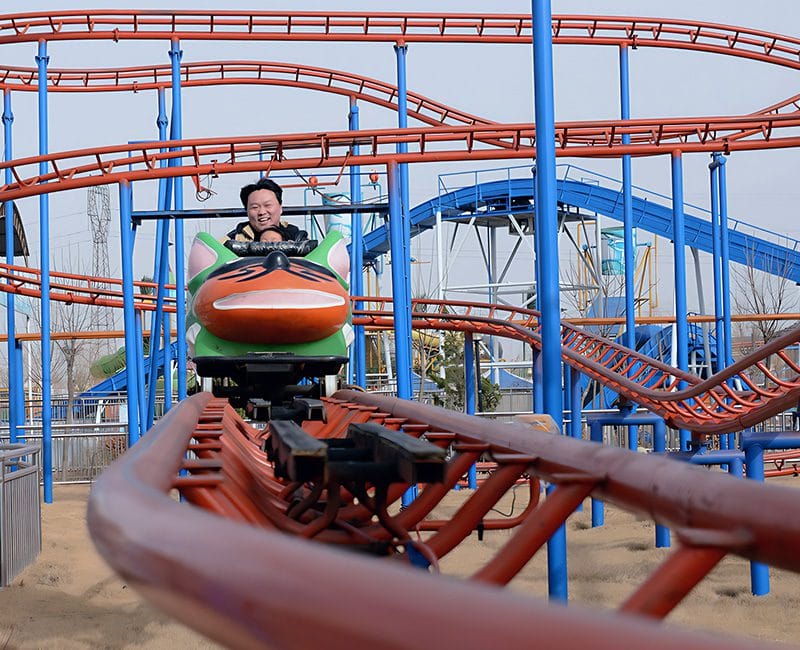
Best Roller Coasters for Small and Medium Amusement Parks

Small and medium parks face a specific problem: they need a coaster that feels substantial enough to attract visitors, but not so large that it consumes the capital budget or the site. The shortlist almost always comes down to three families of ride, and the choice between them decides the park economy for the next decade.

Here is how the options compare, and why a theme park wild mouse coaster for sale usually wins the business case for parks under roughly 20,000 m².

wild mouse coaster for small parks

The Shortlist

Ride family Footprint Thrill Best for
Wild mouse coaster 800 – 1,200 m² Medium – high Urban and family parks
Powered family coaster 1,000 – 2,500 m² Low – medium Young families, indoor sites
Family launch coaster 1,500 – 3,000 m² Medium Growth parks with land

The table explains the pattern: the wild mouse offers the highest thrill per square metre and per dollar, which is exactly what a constrained site needs.

Why the Wild Mouse Wins on Business Case

Capital efficiency

A standard single-train layout with 180 to 220 metres of track is the cheapest way to add a genuine coaster. Site works, station and installation add 20 to 35 percent depending on location, but the total still sits well below a launch coaster.

Throughput that fits the park

The wild mouse coaster throughput matters more than headline speed. A single train dispatching every 50 to 60 seconds carries roughly 700 to 850 guests per hour – enough for a small park at peak without building capacity it will never use.

Appeal across the family

Height restrictions usually start around 120 cm, which brings in older children, teenagers and adults. That is a broader catchment than a theme park family coaster aimed purely at younger riders, and it keeps the ride relevant as the audience ages.

wild mouse coaster track layout

Space and Installation

Plan a fenced envelope of roughly 20 by 40 metres including the station, queue and maintenance access. Check clear height with local planning, and commission a geotechnical report before foundations are designed. Track and supports are fabricated from Structural steel with galvanised protection, and the structure must be anchored to a foundation designed for the dynamic loads of a loaded train.

Operating Cost

  • No launch system and no show effects to maintain
  • Two operators per shift at typical throughput
  • Daily restraint, brake and wheel checks
  • Annual track inspection and weld testing

Those four lines are why a wild mouse can stay open on quiet weekdays when a larger coaster cannot.

How to Compare Offers

Two quotes that differ by 20 percent are usually different rides: track length, train count, control system or installation supervision. Normalise all four before comparing price. For a detailed specification walk-through, see the full guide.

wild mouse coaster station and queue

Indoor or Outdoor?

An outdoor wild mouse suits parks with reliable weather and enough land for a fenced envelope. It is cheaper to build, easier to maintain and reads as a landmark from the road. An indoor installation costs more because the building must carry the foundation loads and the ceiling height, but it protects revenue during rainy or cold seasons.

For a small park in a temperate climate, the practical compromise is an outdoor coaster with a covered station and a themed queue, which keeps the ride operating through light rain without the cost of enclosing the circuit.

Payback and Financing

Most operators model payback over three to five operating seasons. The calculation needs three inputs: the additional visits the ride generates, the average secondary spend those visitors produce inside the park, and the annual operating and maintenance cost of the ride itself. A coaster that adds 15,000 visits a year and lifts food and beverage spend pays back comfortably within that window.

Financing matters as much as price. A standard layout can often be delivered in 60 to 90 days, which means the ride can be ordered after the season ends and installed before the next one begins – avoiding a full year of idle capital. If your bank requires a fixed delivery date, order early enough to absorb a shipping delay rather than paying for an empty site.

What Buyers Should Ask the Manufacturer

Before signing, ask for the design standard the structure is calculated to, the number of trains the station can accept, the spare parts list and the name of the engineer who will supervise installation. Suppliers who answer those questions quickly are usually the ones whose ride is still running smoothly in year five. If the answers are vague, the price is not the issue – the scope is.

Frequently Asked Questions

Is a wild mouse safe for children?

It is designed for riders above the manufacturer height limit, typically around 120 cm. Younger children should ride a family or kiddie coaster instead.

How long does installation take?

Foundations two to four weeks, erection three to five weeks, then commissioning and testing. Production is usually 60 to 90 days for a standard layout.

Can a small park add a second train later?

Yes, if the station and brake run are designed for it from the start. Retrofitting is significantly more expensive.

wild mouse coaster in a family amusement park

Next Step

Send us your site dimensions and expected attendance, and we will model the layout and throughput. Our wild mouse coaster projects by Dinis team can supply drawings, documentation and installation supervision, and as a theme park ride supplier we publish the full scope before the contract so the comparison is like for like.

Can Dinis Amusement Ride Supplier Customize the Roller Coaster Track Length And Height for Your Park?

When it comes to creating an unforgettable amusement park experience, the roller coaster stands as a centerpiece attraction that promises thrills and excitement. At Dinis Amusement Ride Manufacturer, we understand that every park has its unique vision and spatial requirements. That’s why we offer bespoke customization options for roller coaster track lengths and heights, ensuring your attraction not only fits your space but also aligns with the thematic and thrilling experience you want to create.

amusement park roller coasters for sale

Understanding Your Vision

Before we embark on the design and manufacturing process, we invest time in understanding your vision. Whether you envision a family-friendly ride with gentle curves and moderate drops or a high-intensity roller-coaster amusement park ride with towering heights and dramatic loops, our team of skilled engineers and designers is dedicated to bringing your concept to life. We work closely with park owners and designers to develop a comprehensive understanding of your space, theme, and target audience, ensuring every aspect of the ride is tailored to meet those goals.

Customization Capabilities

At Dinis, our customization capabilities are extensive. We can adjust the track length to suit your available space, whether you have a compact area or expansive grounds. Our engineers use state-of-the-art technology and materials such as Q235B steel to design tracks that optimize both space and rider experience. Similarly, the height of the roller coaster can be modified to create the desired level of thrill, whether you’re aiming for a mild, accessible ride or an adrenaline-pumping adventure.

thrilling roller coaster ride for playgrounds

Safety and Compliance

While customization is key, safety remains our utmost priority. Dinis amusement park roller coasters are designed and manufactured in compliance with international safety standards. Each customized ride undergoes rigorous testing to ensure it meets our stringent safety requirements. Our team is committed to delivering not only exciting but also safe rides, providing peace of mind to both park operators and visitors.

Collaboration and Innovation

We believe in a collaborative approach to ride design and customization. Our team is always open to innovative ideas and strives to incorporate the latest technology and design trends into our rides. By partnering with Dinis, you gain access to a wealth of experience and expertise, ensuring your roller coaster is not only a crowd-pleaser but also a unique attraction that sets your park apart.

roller coaster amusement ride for parks

Conclusion

In the competitive world of amusement parks, offering a unique and captivating ride experience is crucial. With Dinis Amusement Ride Manufacturer, you have the opportunity to customize your roller coaster’s track length and height to perfectly align with your vision and space constraints. Let us help you create a standout attraction that not only meets but exceeds the expectations of your guests. Visit our website and contact Dinis today to explore how we can turn your roller coaster dreams into reality. 

How to Design A Roller Coaster Ride for Amusement Parks: Insights from Dinis Amusement Equipment Manufacturer

Designing a roller coaster ride for an amusement park is a thrilling yet complex endeavor that requires a seamless blend of creativity, engineering, and safety. At Dinis Amusement Equipment Manufacturer, we understand that a roller coaster is often the star attraction of any amusement park. Here, we share key insights into how we approach the design process to craft exhilarating and safe experiences for riders.

amusement park roller coaster carnival ride

Understanding the Audience

Before the design process begins, it’s crucial to understand the target demographics. Are we catering to thrill-seekers looking for adrenaline-pumping rides, or is the goal to provide a family-friendly experience? Understanding the audience helps in defining the ride’s elements, such as speed, height, inversions, and thematic storytelling.

Conceptual Design and Theming

A roller coaster is not just about the ride itself; it’s an experience. At Dinis, we prioritize theming as a core part of the design. Whether it’s a space adventure or a jungle expedition, the theme sets the stage for the Dinis amusement park roller coasters for sale. Our team of designers and creative experts brainstorm to create a unique storyline that captivates and engages riders from start to finish.

Engineering Precision

The backbone of any roller coaster is its engineering. Our engineers at Dinis employ cutting-edge technology and software to design ride layouts that are both exciting and safe. Factors such as G-forces, track dynamics, and ride duration are meticulously calculated to ensure a smooth and thrilling experience. We also focus on material selection and structural integrity to withstand the demands of constant operation.

Safety First

Safety is paramount in roller coaster design. We adhere to international safety standards and incorporate multiple layers of safety features, including robust restraint systems, regular maintenance checks, and state-of-the-art PLC control systems. Our commitment to safety ensures that riders can enjoy the thrill without apprehension.

Sustainability and Innovation

In today’s world, sustainability is a key consideration. Dinis is dedicated to integrating eco-friendly materials and energy-efficient technologies into our designs. We continuously explore innovative solutions to reduce the environmental footprint of our coaster amusement park rides while maintaining top-notch performance.

Collaborative Process

Designing a roller coaster is a collaborative effort involving designers, engineers, safety experts, and the amusement park’s management team. Regular communication and feedback loops are essential to align the ride’s design with the park’s vision and operational needs.

roller coaster amusement ride in amusement park

Testing and Iteration

Before the final installation, prototypes and virtual reality simulations are used to test the ride experience. This iterative process allows us to refine elements and ensure the ride delivers the intended thrill and excitement.

In conclusion, designing a roller coaster is an art and science that requires expertise and passion. At Dinis Amusement Equipment Manufacturer, we are committed to creating roller coasters that not only captivate the imagination but also stand as icons of safety and innovation in the amusement park industry. Whether you’re looking to create a new landmark attraction or enhance your park’s offerings, we are here to bring your vision to life with precision and creativity. If needed, welcome to visit our website and contact us now!