A Ferris wheel in a desert climate faces conditions that shape every part of the design: high daytime temperatures, intense UV, dust and occasional sandstorms, and ground that may be sand or compacted fill. The wheel can work well in these conditions, but only if the specification responds to them.
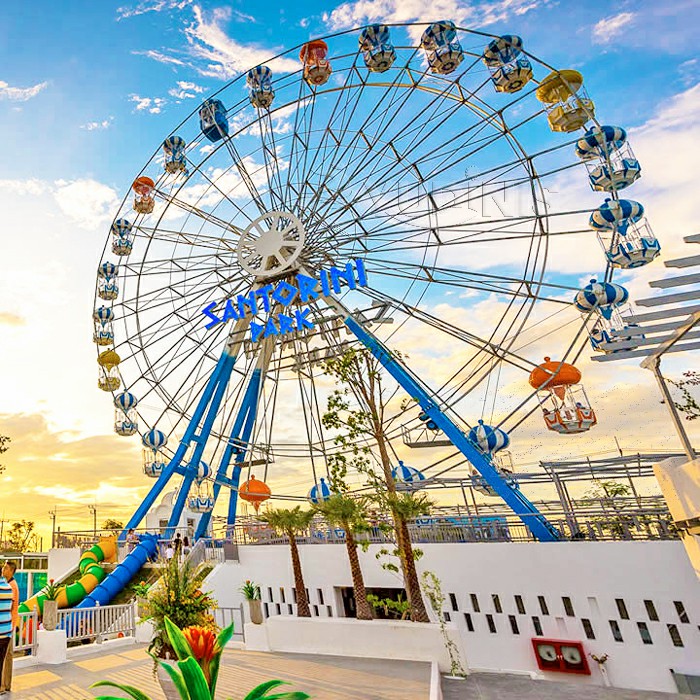
This article sets out what investors should consider before installing a wheel in a desert environment. Configuration options are described on this Ferris wheel for sale page.
Heat and Thermal Movement
Large temperature swings cause steel to expand and contract. The structure and its connections must be designed for the range, and the coating system must tolerate thermal cycling without cracking.
Cabins are affected too: glazing, seals and interior materials degrade faster in high heat and UV.
Cooling and Ventilation in Cabins
An enclosed cabin without cooling becomes unusable during the day. Air conditioning or forced ventilation adds electrical load and maintenance, but it is what makes daytime operation possible.
For an ferris wheel in hot climate conditions, the cooling load should be included in the power design and the operating cost model.
Dust and Sand
Dust enters bearings, sensors and electrical enclosures. Sealed components, filtration and a cleaning schedule are essential.
Sandstorms may require the wheel to be stopped and secured, and the post-storm inspection should include the drive, the bearings and the control system.
Foundations in Sandy Ground
Desert ground can be loose sand, compacted fill or rock close to the surface. The foundation design has to be based on a ground investigation, not on an assumption.
In some locations the water table or salinity affects the concrete specification. Confirm both with the geotechnical report.
UV and Coatings
UV exposure fades paint and degrades seals. A coating system specified for high-UV conditions, with a defined maintenance interval, will last far longer than a standard finish.
Structural steel should be specified with its grade and protection, and inspected for chalking, cracking and corrosion at each service.
Operate in the Evening
In many desert locations the wheel will trade most strongly after sunset. Lighting becomes a revenue feature rather than a decoration, and the operating pattern should be built around it.
The lighting design should also consider light pollution and local planning requirements.
Power and Maintenance
Drive, lighting and cabin cooling together create a high electrical demand. Confirm the supply and the transformer requirement before installation.
Maintenance intervals may need to be shorter, and the spare parts kit should include seals, sensors and filters. A desert ferris wheel installation plan should include these from the start.
Dinis builds Ferris wheels for hot and dusty environments and works as a Ferris wheel manufacturer, specifying coatings, cooling and sealed components for the climate. A desert climate Ferris wheel from Dinis proposal can be prepared: https://www.kidsparksolutions.com/ferris-wheel-for-sale/