A hotel water park has three budgets that are usually discussed separately and should be planned together: the equipment, the space it occupies and the investment that makes it viable. Get one wrong and the other two stop working – a great attraction list on an insufficient site, or a generous site with no operating budget, both fail.
This article covers all three for a hotel or resort project, and explains how to phase the investment so the park opens within budget and still has room to grow.
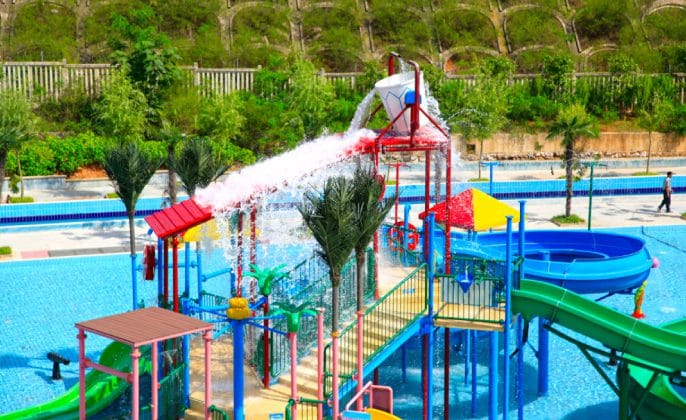
Equipment: What a Hotel Water Park Needs
| Category | Typical items |
|---|---|
| Attractions | Splash structure, 2 – 3 slides, kids play unit |
| Pools | Leisure pool, paddling pool, feature water area |
| Water treatment | Filtration, disinfection, balance tank, pumps |
| Guest facilities | Changing rooms, lockers, shade, pool bar |
| Safety | Lifeguard stations, signage, rescue equipment |
Slide shells and play panels are commonly produced in FRP and fibreglass, and the finish matters more in a hotel than in a public park because guests judge the property by the water area. Specify UV-stable gelcoat and stainless fixings if the park is outdoors.
Space: Sizing to Occupancy
Size the park to peak occupancy, not to the plot. A 300-room hotel at double occupancy may have 400 to 500 guests wanting water on a peak afternoon. At roughly 1.5 to 2.5 m² per guest, that suggests 600 to 1,200 m² of developed area. Add a service route, plant room and a buffer between the park and guest rooms.
The phased water park investment plan should be used as a check, not as a target: it tells you whether the design fits the budget you have, but it cannot tell you whether the guest count justifies it.
Investment: Where the Money Goes
A compact hotel water park of 300 to 1,500 m² typically requires USD 250,000 to 1.2 million in attraction and plant investment, plus site works and installation. The water park cost per square metre is higher than a public park because the finish standard and integration with existing buildings add cost.
Budget the following as separate lines: attractions, pools and civil works, water treatment, buildings and facilities, installation, and the first season of operating costs. Mixing them into one number makes the investment impossible to defend to ownership.
Operating Model
Guest-only operation supports room rates and keeps the park quieter. Day passes add revenue but require separate access control, more changing capacity and a ticket system. Decide before the layout is fixed, because retrofitting a public entrance is expensive.
Phasing the Investment
A Dinis water park team usually opens the splash zone and leisure pool first, then adds slides once guest response is known. The plant room should still be sized for the final configuration; retrofitting filtration and pipework costs far more than the interest saved.
Common Mistakes
- Designing for the available land rather than the guest count
- Under-sizing the plant room to save space
- Choosing thrill slides for a family-dominated guest mix
- Forgetting separate access for day-pass visitors
- Leaving heating and shade out of the initial budget
Equipment Selection by Hotel Type
A city hotel with limited outdoor space usually benefits from a compact splash structure and a paddling pool rather than slides. A beach resort with a larger garden can carry two or three slides and a leisure pool. A mountain or cold-climate property may need an indoor water play area, which changes the building and ventilation budget substantially.
Match the equipment to how guests will use the park. A city hotel may see short afternoon visits; a resort may see families spending half a day. The second case justifies more shade, more seating and a food outlet, all of which appear in the budget but not in the attraction list.
What the Hotel Gains
The return from a hotel water park is rarely ticket revenue alone. It shows up as higher room rates in the family segment, higher weekend occupancy and more on-property spend. Model those effects before deciding the size: a modest park that lifts occupancy by a few points can outperform a larger one that impresses in photographs but costs more to run.
Include the park’s operating cost in that model. An amenity that loses money every month is not a marketing asset for long, however good it looks in the brochure.
One final note: confirm the hotel’s insurance covers water attractions before commissioning. Some policies exclude pools and slides unless the operator can demonstrate certified lifeguards and documented maintenance, and that requirement can affect the opening date.
Frequently Asked Questions
How much does a hotel water park cost?
A 300 to 1,500 m² scheme typically falls between USD 250,000 and 1.2 million for attractions and plant, plus site works and installation.
Is a wave pool suitable for a hotel?
Rarely. The plant and staffing load is hard to justify below roughly 4,000 m² of park area.
Can the park be built in stages?
Yes, and it is usually the best approach for a hotel. Open the core attractions first, then add capacity from proven demand.
Next Step
Send us the hotel’s room count, guest profile and site area, and we will recommend an equipment list and a space plan. For a worked example of the what does it cost to build a water park, our cost guide breaks down each block by park size. To compare configurations, see the options. Our amusement park solutions provider team can also advise on integration with the existing property.