A new family park usually has room in the first budget for one signature ride, and the shortlist tends to come down to two classics: a Ferris wheel or a double-decker carousel. Both are recognisable, both suit families and both can anchor a park. They are not interchangeable, though, and the one that suits a given site depends on how the park expects to earn.
This article compares the two on the measures that decide the investment: capital, capacity, footprint, operating pattern and the way each ride supports the rest of the park. It sits alongside a how much does it cost to build an amusement park budget, where both options have to be costed with their foundations and site works.
What Each Ride Does for a Park
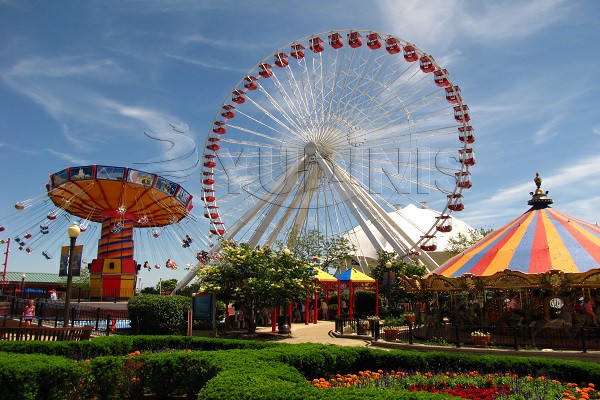
A Ferris wheel works as a landmark. It is visible from outside the park, it photographs well and it gives visitors a reason to stop and look up. Its revenue comes from a separate ticket in many parks, which makes it a direct earner rather than a supporting attraction.
A double-decker carousel works as a gathering point. It carries more passengers per cycle, loads quickly and appeals to a wide age range, including adults who ride with young children. It rarely justifies a separate ticket, but it keeps families in the park longer and supports everything around it.
Capacity and Throughput
A large carousel usually moves more passengers per hour than a Ferris wheel, because the cycle is short and the vehicle is large. That makes it efficient for a park that needs to absorb crowds rather than entertain them for long.
A Ferris wheel runs a longer cycle and carries fewer people at a time, but each passenger spends more time on the ride. For a park that earns from admission rather than per ride, that longer dwell time is not necessarily an advantage; for one that earns per ride, it can justify a higher ticket.
Footprint and Site Requirements
A carousel needs a compact, level base and a clear perimeter for loading. A Ferris wheel needs a taller clearance, a heavier foundation and enough space for the structure to be erected. On a tight site, the carousel is usually the easier fit.
The wheel’s height is also a planning matter. A tall structure may need consent that a carousel never triggers, and that can extend the project timeline well beyond the manufacturing period.
Weather and Operating Pattern
Ferris wheels are sensitive to wind and often stop operating before other rides do. They also depend on a view and on lighting to work after dark. Carousels run in most weather, need little more than a canopy for rain and operate consistently through the day.
A park in a windy or coastal location should weigh this carefully. A wheel that is closed on a meaningful number of days has a different payback from one that runs whenever the park is open.
Capital and Operating Cost
A double-decker carousel generally costs less to install, needs a simpler foundation and requires fewer staff to operate. Its maintenance is well understood and its spare parts are widely available.
A Ferris wheel carries a higher capital cost, a heavier foundation and a more demanding inspection regime. It also consumes more power and needs more maintenance attention per operating hour.
Investors comparing the two should put the total installed cost against the total annual net cash flow, not the equipment price against the ticket income. An amusement park ride comparison from Dinis can price both options with their foundations and site works.
Which One to Buy First
If the park needs a visible landmark to attract visitors from outside, and the site can support the height and the wind, the wheel should come first. If the park needs capacity, reliability and a family gathering point, the carousel is the stronger first investment.
A useful test is to ask what the park lacks. A park with no recognisable attraction needs the wheel; a park with a landmark but long queues needs the carousel. An amusement park rides manufacturer can usually advise on the capacity and footprint of both for a specific site, and a structured amusement park ride selection review will show which one the budget can carry first.
Where budget allows, the two work well together: the wheel draws visitors and the carousel keeps them moving. Buyers planning that combination can review a theme park ride package that prices both options on the same basis.
Dinis supplies both ride types and works as an amusement park equipment supplier for family parks, with the structural and electrical data needed to compare them properly. Cabin and decorative components are often produced in FRP, which keeps maintenance manageable on either ride. Reference: https://www.kidsparksolutions.com/how-much-does-it-cost-to-build-an-amusement-park/
Tell us the site size, the target audience and the budget, and we will propose a first-ride recommendation with the numbers behind it.