Should a New Family Amusement Park Invest in a Ferris Wheel or a Double Decker Carousel First?

A new family park usually has room in the first budget for one signature ride, and the shortlist tends to come down to two classics: a Ferris wheel or a double-decker carousel. Both are recognisable, both suit families and both can anchor a park. They are not interchangeable, though, and the one that suits a given site depends on how the park expects to earn.

This article compares the two on the measures that decide the investment: capital, capacity, footprint, operating pattern and the way each ride supports the rest of the park. It sits alongside a how much does it cost to build an amusement park budget, where both options have to be costed with their foundations and site works.
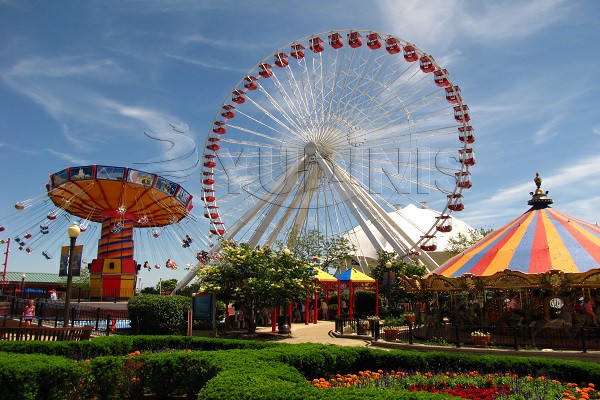
amusement park with ferris wheel and carousel

What Each Ride Does for a Park

A Ferris wheel works as a landmark. It is visible from outside the park, it photographs well and it gives visitors a reason to stop and look up. Its revenue comes from a separate ticket in many parks, which makes it a direct earner rather than a supporting attraction.

A double-decker carousel works as a gathering point. It carries more passengers per cycle, loads quickly and appeals to a wide age range, including adults who ride with young children. It rarely justifies a separate ticket, but it keeps families in the park longer and supports everything around it.

Capacity and Throughput

A large carousel usually moves more passengers per hour than a Ferris wheel, because the cycle is short and the vehicle is large. That makes it efficient for a park that needs to absorb crowds rather than entertain them for long.

A Ferris wheel runs a longer cycle and carries fewer people at a time, but each passenger spends more time on the ride. For a park that earns from admission rather than per ride, that longer dwell time is not necessarily an advantage; for one that earns per ride, it can justify a higher ticket.

Footprint and Site Requirements

A carousel needs a compact, level base and a clear perimeter for loading. A Ferris wheel needs a taller clearance, a heavier foundation and enough space for the structure to be erected. On a tight site, the carousel is usually the easier fit.

The wheel’s height is also a planning matter. A tall structure may need consent that a carousel never triggers, and that can extend the project timeline well beyond the manufacturing period.

Weather and Operating Pattern

Ferris wheels are sensitive to wind and often stop operating before other rides do. They also depend on a view and on lighting to work after dark. Carousels run in most weather, need little more than a canopy for rain and operate consistently through the day.

A park in a windy or coastal location should weigh this carefully. A wheel that is closed on a meaningful number of days has a different payback from one that runs whenever the park is open.
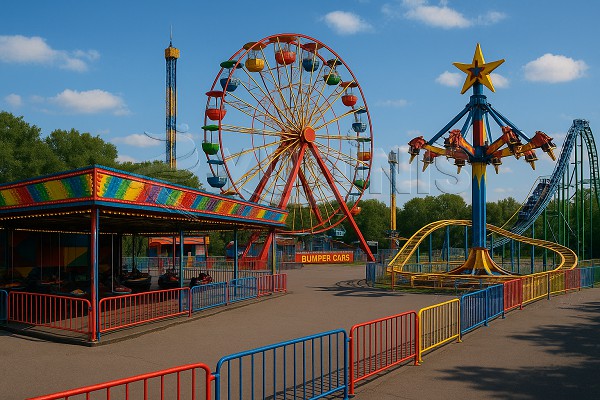
double decker carousel in a family park

Capital and Operating Cost

A double-decker carousel generally costs less to install, needs a simpler foundation and requires fewer staff to operate. Its maintenance is well understood and its spare parts are widely available.

A Ferris wheel carries a higher capital cost, a heavier foundation and a more demanding inspection regime. It also consumes more power and needs more maintenance attention per operating hour.

Investors comparing the two should put the total installed cost against the total annual net cash flow, not the equipment price against the ticket income. An amusement park ride comparison from Dinis can price both options with their foundations and site works.

Which One to Buy First

If the park needs a visible landmark to attract visitors from outside, and the site can support the height and the wind, the wheel should come first. If the park needs capacity, reliability and a family gathering point, the carousel is the stronger first investment.

A useful test is to ask what the park lacks. A park with no recognisable attraction needs the wheel; a park with a landmark but long queues needs the carousel. An amusement park rides manufacturer can usually advise on the capacity and footprint of both for a specific site, and a structured amusement park ride selection review will show which one the budget can carry first.

Where budget allows, the two work well together: the wheel draws visitors and the carousel keeps them moving. Buyers planning that combination can review a theme park ride package that prices both options on the same basis.

Dinis supplies both ride types and works as an amusement park equipment supplier for family parks, with the structural and electrical data needed to compare them properly. Cabin and decorative components are often produced in FRP, which keeps maintenance manageable on either ride. Reference: https://www.kidsparksolutions.com/how-much-does-it-cost-to-build-an-amusement-park/

Tell us the site size, the target audience and the budget, and we will propose a first-ride recommendation with the numbers behind it.
What Hidden Costs Should Investors Include Before Building an Amusement Park?

Almost every amusement park project begins with a budget, and very few of them survive contact with the construction site unchanged. What surprises investors is not the price of the rides themselves. It is everything that has to be built around them: ground works, utilities, access, approvals, and the operating costs that start running before the first ticket is sold.

This article walks through the cost lines that are most often left out of a first estimate, and explains how early decisions about ride selection and park layout change the total figure. Investors who want to see how the numbers fit together can start with this how much does it cost to build an amusement park guide before contacting suppliers.

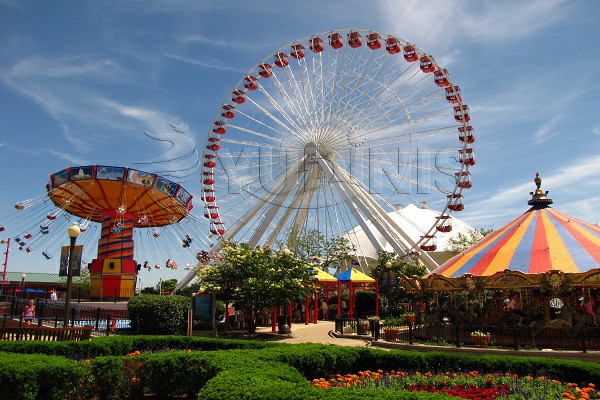
amusement park under construction

Site Preparation Costs That Rarely Appear in the First Budget

Land is usually the first line an investor writes down. Preparing that land is where the budget starts to move. A flat, well-drained plot and a sloped site with soft ground can differ enormously in what they cost to make buildable.

The items worth costing properly at the start include:

  • Ground improvement, levelling and compaction work
  • Drainage, retention and stormwater management
  • Retaining walls, embankments and slope protection where the terrain requires it
  • Access roads, service routes and parking areas
  • Perimeter fencing, gates and site security during construction

Foundations deserve separate attention. Large rides need reinforced concrete bases designed for their specific loads, and those bases are usually more expensive than the investor expects because they cannot be value-engineered after the ride is chosen.

Utility and Infrastructure Connections

Power is the second cost that grows quietly. A park with a small number of family rides needs far less electrical capacity than a park with high-capacity attractions, night lighting and a food and beverage operation. Where the local grid cannot deliver the required capacity, the project has to pay for a transformer, cabling or a generator.

Water supply, sewage, waste handling, site lighting and communication cabling all follow the same pattern. Each is modest on its own and significant when added together. Bringing these services to the correct locations before rides are installed is far cheaper than retrofitting them afterwards.

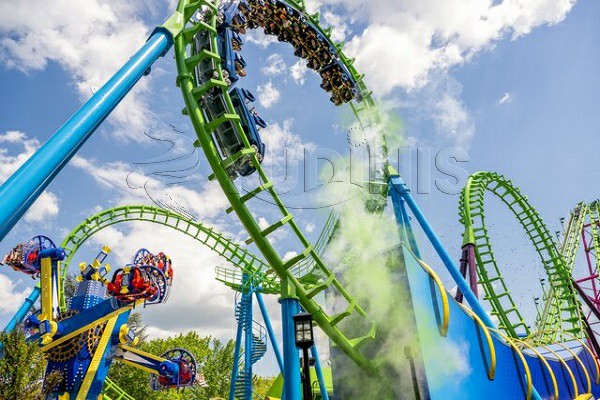
amusement park infrastructure and rides

The practical test is simple: if the park were to open tomorrow, which services would have to be working? Those are the connections that must be priced in the construction budget rather than in the operating budget.

Ride Procurement Costs Beyond the Quoted Price

The quotation a buyer receives from a manufacturer normally covers the ride itself. The delivered, working attraction costs more than that. A complete amusement park cost estimation from Dinis therefore separates the ride price from four additional layers:

  • Logistics. Export packing, inland transport, ocean freight, insurance, port handling and customs clearance.
  • Installation. Foundations, steel erection, mechanical and electrical assembly, and the labour to carry it out.
  • Commissioning. Load testing, safety verification and handover before the ride carries a single passenger.
  • Training and documentation. Operator training, maintenance manuals and spare parts inventory.

Buyers who compare only the factory price often find that the cheapest quotation is not the cheapest project. Delivery scope, warranty terms and after-sales support change the real cost of ownership more than a small difference in unit price.

theme park rides installation

How Layout and Ride Selection Reduce the Total Investment

Layout decisions made on paper are free. The same decisions made after construction are expensive. A park plan that groups rides by shared infrastructure, keeps service routes clear and leaves room for a later phase avoids rebuilding the same ground twice.

Ride selection matters just as much. Choosing attractions that balance passenger capacity against investment, and that appeal to the families who will visit most often, produces a cost to build a family amusement park that stays within reach while still generating repeat visits. Adding a second high-capacity attraction later, once the park has cash flow, is usually easier than financing everything at once.

Phasing is not a sign of a weaker project. It is often the difference between a park that opens and a park that stalls halfway through construction.

Operating Costs That Start Before Opening Day

Pre-opening costs are frequently underestimated because they are not construction. They include staff recruitment and training, insurance, safety inspection, licensing, marketing and launch events, and the working capital needed to run the park through its first low season. A park that opens without this reserve is fragile for the first year, regardless of how good the rides are.

Once operating, the recurring lines are maintenance, spare parts, consumables, utilities and wages. Estimating these realistically – and pricing tickets and food accordingly – is what turns a well-built park into a viable business rather than a construction project that never recovers its amusement park project cost.

family amusement park operation

Where to Start

The most reliable way to control an amusement park budget is to fix the ride list and the layout before the civil works begin, and to obtain quotations that state clearly what is and is not included. Structural quality is also worth confirming at this stage, since components such as FRP shells, galvanised steel frames and drive systems determine both the service life of the ride and the maintenance cost for the next decade.

Dinis supplies amusement park rides and complete park equipment packages for family parks, and works with investors from ride selection through to commissioning. As an amusement park rides manufacturer, the company provides the technical drawings, load calculations and packing documentation that let buyers build realistic project budgets. Tell us the land size, your target audience and your investment range, and we will prepare a ride package proposal with the associated cost structure.

Current project reference: https://www.kidsparksolutions.com/how-much-does-it-cost-to-build-an-amusement-park/