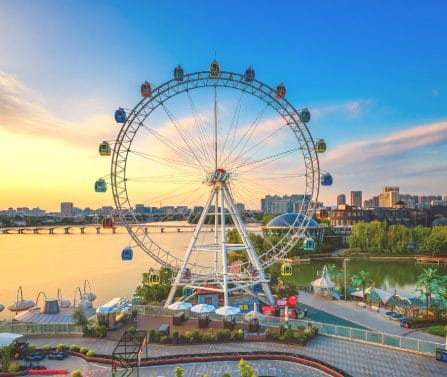
A water park without a pool can still give families a complete water-play experience. A splash pad uses nozzles, spray features, shallow run-off areas, and themed play elements instead of a swimming pool. That changes the engineering scope, but it does not remove the need for treatment, drainage, safe surfacing, controls, and an operating plan.
The cost of a splash pad therefore depends on the complete project rather than a single equipment price. The same principle applies when estimating How much does it cost to build a water park: buyers need a defined site, feature package, and operating standard before figures can be compared responsibly.
What Is Included in a Splash Pad Project?
A splash pad can include spray features, interactive valves, pumps, filtration, disinfection, controls, water storage, drainage, surfacing, shade, fencing, signage, and a plant area. Design, delivery, installation, commissioning, training, and documentation also belong in the complete scope.
| Budget group | Typical work | Main cost driver |
|---|---|---|
| Design | Layout, hydraulic design, drawings, permits | Site complexity and local reviews |
| Water-play products | Nozzles, controls, features, and play elements | Feature count and intended age groups |
| Water treatment | Filtration, disinfection, testing, and storage | Water volume and operating method |
| Site construction | Drainage, utilities, foundations, and surfacing | Ground conditions and service locations |
| Guest facilities | Shade, seats, fencing, gates, and storage | Layout and expected family traffic |
| Installation | Freight, lifting, assembly, and commissioning | Access, distance, and local labor |
Why a Splash Pad Can Cost Less Than a Pool
A splash pad avoids a large swimming pool shell and the associated deep-water systems. Its play area is usually intended for shallow water and short contact, and the operating model may use recirculation, treatment, and controlled drainage suited to the final design.
That can reduce some construction demands, but it does not make the project simple. Correct drainage, safe surfaces, treatment, and maintenance still require engineering. Savings should come from a deliberate scope, not from leaving out systems the attraction needs to operate safely.
The water park investment by size should reflect the finished layout and water system. A small spray area with few features can have a very different budget from a themed children’s water park with multiple zones, shade structures, and extensive guest facilities.
Feature Choices Drive the Design
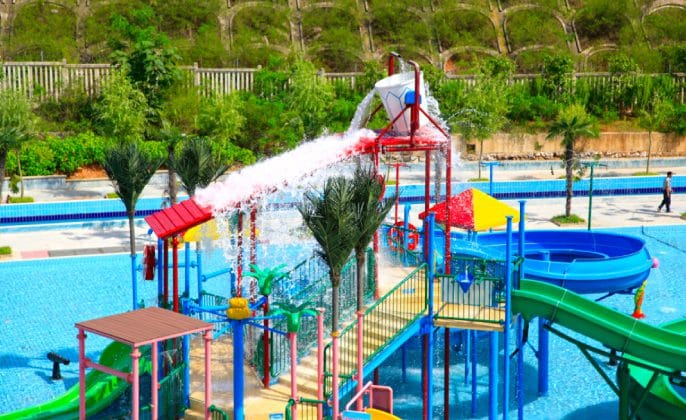
Ground nozzles are often the core play element, but spray cannons, tipping features, interactive posts, and themed structures can change hydraulic demand and maintenance. Each feature should have a clear purpose for the intended age group.
- Keep toddler and active play zones separate where possible.
- Confirm every nozzle can be reached for service.
- Check that treatment capacity supports the final feature count.
- Use controls that allow logical zone isolation.
- Choose durable surfaces and materials for daily wet use.
Materials should suit repeated cleaning and outdoor exposure. Polycarbonate may be appropriate for selected transparent guards or decorative components where the manufacturer confirms impact and weather suitability. It should not be substituted for an approved material without engineering review.
Treatment and Drainage Are Major Scope Items
Plan the support systems together
The water treatment system must match the finished splash pad and the chosen operating routine. Confirm filtration, disinfection, testing, backwashing, chemical storage, fault alarms, and emergency shutdown. Drainage must handle normal spray, cleaning, and heavy rain without creating hazards.
These systems should be priced as part of the attraction, not treated as generic site allowances. A supplier that cannot show treatment capacity and control logic has not provided a complete technical offer.
Surface Preparation and Utility Connections
Existing services strongly affect the price. New water supply, power, communications, and drainage routes can require excavation, trenching, protection, and reinstatement. Poor ground conditions may require additional structural work beneath the play surface and plant area.
Ask every bidder to define the project boundary. Clarify who supplies each utility and who completes the final connection. These interfaces are common sources of variation after a contract is signed.
Build the Budget for the Site You Have
water park cost planning by size should use actual local quotations for civil work, utilities, and support facilities. The attraction supplier can price the equipment and technical installation scope; local contractors may handle foundations, drainage, or landscaping. The owner should assemble these into one complete model.
- Prepare a site plan and define the play zones.
- Set the target audience and operating hours.
- Obtain a line-item equipment and treatment offer.
- Price local site work and utility connections.
- Include training, spare parts, and commissioning.
- Keep contingency for verified site risks.
Compare Quotations on Identical Scope
A splash pad proposal should identify included drawings, equipment, treatment, controls, delivery, installation support, documentation, and training. State exclusions clearly. If one price excludes drainage or shade, it cannot be compared directly with a turnkey offer.
An engineering team experienced with Dinis splash pad engineering should be able to connect the water-play package to the required treatment and installation details. The proposal should also show how the design meets the site’s operating requirements rather than only listing feature names.
Look Beyond the Opening Cost
A splash pad has continuing costs for water testing, treatment chemicals, cleaning, maintenance labor, replacement parts, utilities, inspections, and seasonal preparation. Include these in the annual operating budget and identify who can service the controls and treatment system.
Review the manufacturer’s maintenance schedule before approving the equipment. Spare nozzles, sensors, seals, and other critical parts should be listed with replacement guidance. A modest reserve for unplanned repairs is more realistic than assuming the pad will run without maintenance.
Commission the Complete Attraction
Test every feature, pump, control mode, alarm, valve, drain, and isolation point. Operate normal and fault conditions and confirm that staff can follow the shutdown procedure. Check surfacing, gates, signs, shade, and access before promotion begins.
A splash pad can be a strong water attraction without a pool when the design is complete and maintainable. To see splash pad equipment choices and compare systems, work with an outdoor amusement equipment partner that can coordinate play features, treatment, and installation. The result should be a full project budget with no hidden operating surprises.