Water Park Without a Pool: How Much Does a Splash Pad Cost?

A water park without a pool can still give families a complete water-play experience. A splash pad uses nozzles, spray features, shallow run-off areas, and themed play elements instead of a swimming pool. That changes the engineering scope, but it does not remove the need for treatment, drainage, safe surfacing, controls, and an operating plan.

The cost of a splash pad therefore depends on the complete project rather than a single equipment price. The same principle applies when estimating How much does it cost to build a water park: buyers need a defined site, feature package, and operating standard before figures can be compared responsibly.
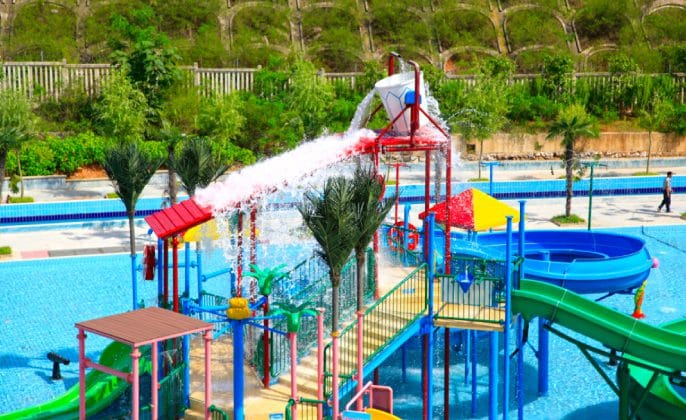
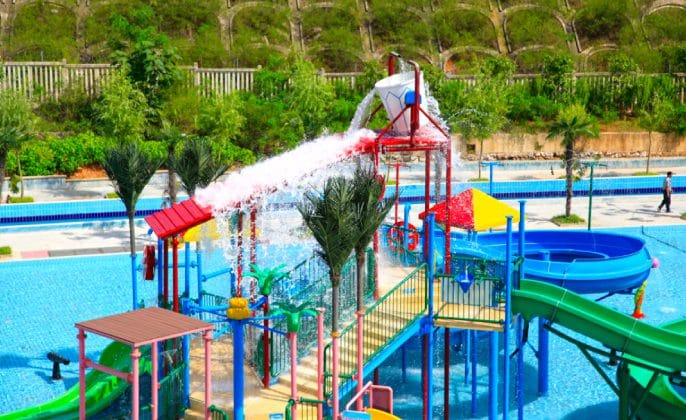
childrens splash pad operating as a water park without a pool

What Is Included in a Splash Pad Project?

A splash pad can include spray features, interactive valves, pumps, filtration, disinfection, controls, water storage, drainage, surfacing, shade, fencing, signage, and a plant area. Design, delivery, installation, commissioning, training, and documentation also belong in the complete scope.

Budget group Typical work Main cost driver
Design Layout, hydraulic design, drawings, permits Site complexity and local reviews
Water-play products Nozzles, controls, features, and play elements Feature count and intended age groups
Water treatment Filtration, disinfection, testing, and storage Water volume and operating method
Site construction Drainage, utilities, foundations, and surfacing Ground conditions and service locations
Guest facilities Shade, seats, fencing, gates, and storage Layout and expected family traffic
Installation Freight, lifting, assembly, and commissioning Access, distance, and local labor

Why a Splash Pad Can Cost Less Than a Pool

A splash pad avoids a large swimming pool shell and the associated deep-water systems. Its play area is usually intended for shallow water and short contact, and the operating model may use recirculation, treatment, and controlled drainage suited to the final design.

That can reduce some construction demands, but it does not make the project simple. Correct drainage, safe surfaces, treatment, and maintenance still require engineering. Savings should come from a deliberate scope, not from leaving out systems the attraction needs to operate safely.

The water park investment by size should reflect the finished layout and water system. A small spray area with few features can have a very different budget from a themed children’s water park with multiple zones, shade structures, and extensive guest facilities.

Feature Choices Drive the Design

Ground nozzles are often the core play element, but spray cannons, tipping features, interactive posts, and themed structures can change hydraulic demand and maintenance. Each feature should have a clear purpose for the intended age group.

  • Keep toddler and active play zones separate where possible.
  • Confirm every nozzle can be reached for service.
  • Check that treatment capacity supports the final feature count.
  • Use controls that allow logical zone isolation.
  • Choose durable surfaces and materials for daily wet use.

Materials should suit repeated cleaning and outdoor exposure. Polycarbonate may be appropriate for selected transparent guards or decorative components where the manufacturer confirms impact and weather suitability. It should not be substituted for an approved material without engineering review.

Treatment and Drainage Are Major Scope Items

Plan the support systems together

The water treatment system must match the finished splash pad and the chosen operating routine. Confirm filtration, disinfection, testing, backwashing, chemical storage, fault alarms, and emergency shutdown. Drainage must handle normal spray, cleaning, and heavy rain without creating hazards.

These systems should be priced as part of the attraction, not treated as generic site allowances. A supplier that cannot show treatment capacity and control logic has not provided a complete technical offer.

Surface Preparation and Utility Connections

Existing services strongly affect the price. New water supply, power, communications, and drainage routes can require excavation, trenching, protection, and reinstatement. Poor ground conditions may require additional structural work beneath the play surface and plant area.

Ask every bidder to define the project boundary. Clarify who supplies each utility and who completes the final connection. These interfaces are common sources of variation after a contract is signed.

Build the Budget for the Site You Have

water park cost planning by size should use actual local quotations for civil work, utilities, and support facilities. The attraction supplier can price the equipment and technical installation scope; local contractors may handle foundations, drainage, or landscaping. The owner should assemble these into one complete model.

  1. Prepare a site plan and define the play zones.
  2. Set the target audience and operating hours.
  3. Obtain a line-item equipment and treatment offer.
  4. Price local site work and utility connections.
  5. Include training, spare parts, and commissioning.
  6. Keep contingency for verified site risks.

Compare Quotations on Identical Scope

A splash pad proposal should identify included drawings, equipment, treatment, controls, delivery, installation support, documentation, and training. State exclusions clearly. If one price excludes drainage or shade, it cannot be compared directly with a turnkey offer.

An engineering team experienced with Dinis splash pad engineering should be able to connect the water-play package to the required treatment and installation details. The proposal should also show how the design meets the site’s operating requirements rather than only listing feature names.

Look Beyond the Opening Cost

A splash pad has continuing costs for water testing, treatment chemicals, cleaning, maintenance labor, replacement parts, utilities, inspections, and seasonal preparation. Include these in the annual operating budget and identify who can service the controls and treatment system.

Review the manufacturer’s maintenance schedule before approving the equipment. Spare nozzles, sensors, seals, and other critical parts should be listed with replacement guidance. A modest reserve for unplanned repairs is more realistic than assuming the pad will run without maintenance.

Commission the Complete Attraction

Test every feature, pump, control mode, alarm, valve, drain, and isolation point. Operate normal and fault conditions and confirm that staff can follow the shutdown procedure. Check surfacing, gates, signs, shade, and access before promotion begins.

A splash pad can be a strong water attraction without a pool when the design is complete and maintainable. To see splash pad equipment choices and compare systems, work with an outdoor amusement equipment partner that can coordinate play features, treatment, and installation. The result should be a full project budget with no hidden operating surprises.
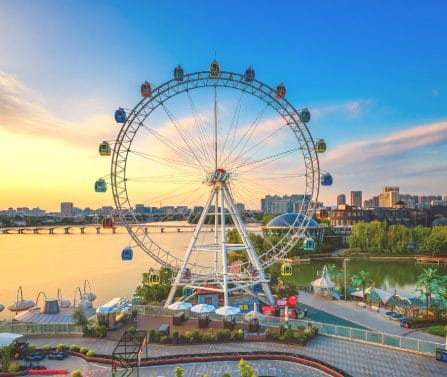
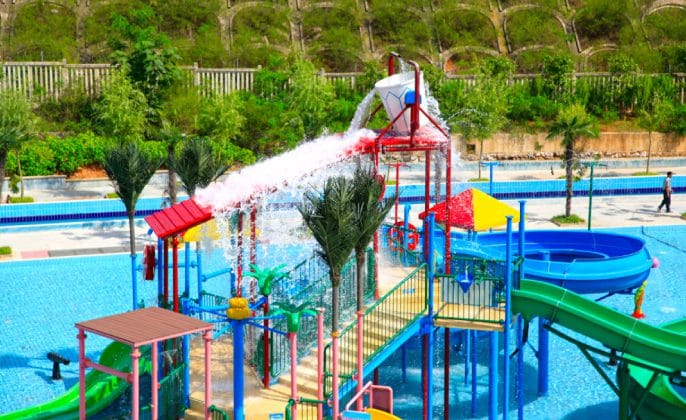
water park splash pad spray equipment

family splash pad without a swimming pool

childrens splash pad water features and drainage

Hotel Water Park: Equipment, Space, and Investment

A hotel water park has three budgets that are usually discussed separately and should be planned together: the equipment, the space it occupies and the investment that makes it viable. Get one wrong and the other two stop working – a great attraction list on an insufficient site, or a generous site with no operating budget, both fail.

This article covers all three for a hotel or resort project, and explains how to phase the investment so the park opens within budget and still has room to grow.

hotel water park with slides and pool

Equipment: What a Hotel Water Park Needs

Category Typical items
Attractions Splash structure, 2 – 3 slides, kids play unit
Pools Leisure pool, paddling pool, feature water area
Water treatment Filtration, disinfection, balance tank, pumps
Guest facilities Changing rooms, lockers, shade, pool bar
Safety Lifeguard stations, signage, rescue equipment

Slide shells and play panels are commonly produced in FRP and fibreglass, and the finish matters more in a hotel than in a public park because guests judge the property by the water area. Specify UV-stable gelcoat and stainless fixings if the park is outdoors.

Space: Sizing to Occupancy

Size the park to peak occupancy, not to the plot. A 300-room hotel at double occupancy may have 400 to 500 guests wanting water on a peak afternoon. At roughly 1.5 to 2.5 m² per guest, that suggests 600 to 1,200 m² of developed area. Add a service route, plant room and a buffer between the park and guest rooms.

The phased water park investment plan should be used as a check, not as a target: it tells you whether the design fits the budget you have, but it cannot tell you whether the guest count justifies it.

resort pool deck and water play

Investment: Where the Money Goes

A compact hotel water park of 300 to 1,500 m² typically requires USD 250,000 to 1.2 million in attraction and plant investment, plus site works and installation. The water park cost per square metre is higher than a public park because the finish standard and integration with existing buildings add cost.

Budget the following as separate lines: attractions, pools and civil works, water treatment, buildings and facilities, installation, and the first season of operating costs. Mixing them into one number makes the investment impossible to defend to ownership.

Operating Model

Guest-only operation supports room rates and keeps the park quieter. Day passes add revenue but require separate access control, more changing capacity and a ticket system. Decide before the layout is fixed, because retrofitting a public entrance is expensive.

Phasing the Investment

A Dinis water park team usually opens the splash zone and leisure pool first, then adds slides once guest response is known. The plant room should still be sized for the final configuration; retrofitting filtration and pipework costs far more than the interest saved.

hotel water park investment planning

Common Mistakes

  • Designing for the available land rather than the guest count
  • Under-sizing the plant room to save space
  • Choosing thrill slides for a family-dominated guest mix
  • Forgetting separate access for day-pass visitors
  • Leaving heating and shade out of the initial budget

Equipment Selection by Hotel Type

A city hotel with limited outdoor space usually benefits from a compact splash structure and a paddling pool rather than slides. A beach resort with a larger garden can carry two or three slides and a leisure pool. A mountain or cold-climate property may need an indoor water play area, which changes the building and ventilation budget substantially.

Match the equipment to how guests will use the park. A city hotel may see short afternoon visits; a resort may see families spending half a day. The second case justifies more shade, more seating and a food outlet, all of which appear in the budget but not in the attraction list.

What the Hotel Gains

The return from a hotel water park is rarely ticket revenue alone. It shows up as higher room rates in the family segment, higher weekend occupancy and more on-property spend. Model those effects before deciding the size: a modest park that lifts occupancy by a few points can outperform a larger one that impresses in photographs but costs more to run.

Include the park’s operating cost in that model. An amenity that loses money every month is not a marketing asset for long, however good it looks in the brochure.

One final note: confirm the hotel’s insurance covers water attractions before commissioning. Some policies exclude pools and slides unless the operator can demonstrate certified lifeguards and documented maintenance, and that requirement can affect the opening date.

Frequently Asked Questions

How much does a hotel water park cost?

A 300 to 1,500 m² scheme typically falls between USD 250,000 and 1.2 million for attractions and plant, plus site works and installation.

Is a wave pool suitable for a hotel?

Rarely. The plant and staffing load is hard to justify below roughly 4,000 m² of park area.

Can the park be built in stages?

Yes, and it is usually the best approach for a hotel. Open the core attractions first, then add capacity from proven demand.

resort water park equipment

Next Step

Send us the hotel’s room count, guest profile and site area, and we will recommend an equipment list and a space plan. For a worked example of the what does it cost to build a water park, our cost guide breaks down each block by park size. To compare configurations, see the options. Our amusement park solutions provider team can also advise on integration with the existing property.

What Is the Initial Investment Required to Build a Water Park?

Planning a water park starts with one unavoidable question: how much does it cost to build a water park before a single ticket is sold. Owners who answer that question early avoid the most expensive mistake in the industry – buying equipment before the site, the water treatment capacity and the operating budget have been worked out together.

The honest answer is that a realistic water park investment cost depends on four variables: the size of the site, the mix of attractions, the local cost of construction labour, and the standard of finish you choose for guests. This guide breaks the initial investment down item by item so you can build a defensible number for your own project.

Small water park with slides and splash area

The Short Answer: Water Park Investment Ranges

A small neighbourhood or hotel water park of roughly 1,000 to 5,000 square metres – a splash pad, two or three body or raft slides, a leisure pool and basic changing rooms – typically requires USD 250,000 to 1,200,000 of total capital expenditure. A mid-size commercial water park of 5,000 to 20,000 square metres with a wave pool, multi-lane racer slides and food and beverage outlets generally lands between USD 1.5 million and 6 million. Destination-scale parks above 20,000 square metres start at USD 8 million and rise quickly once themed structures and large wave pools are added.

What Drives the Initial Investment

Every water park budget can be split into six blocks. Understanding the weight of each block is how you control the water park construction budget instead of discovering it halfway through construction.

Land, Earthworks and Site Preparation

If land is already owned, earthworks are usually 8 to 15 percent of the total. Sloped sites cost more because of retaining walls and cut-and-fill. Flat sites with good drainage cost least. Access roads for equipment deliveries should be planned at this stage – a 12 metre slide section cannot be craned into place through a narrow garden path.

Water Park Equipment: Slides, Splash Pads and Wave Pools

Attractions are the largest single line, normally 35 to 55 percent of the project. Body slides are the most economical per guest, raft slides cost more but carry higher throughput, and wave pools are the most capital-intensive single element. Splash pads with interactive play structures are the cheapest way to add capacity for young families. Slide shells are built from FRP – glass-reinforced plastic – which is why surface quality, resin grade and gelcoat thickness matter more than the colour of the ride.

Water park attractions with pool and slides

Water Treatment, Filtration and the Plant Room

Filtration, disinfection, balance tanks, pumps and pipework typically account for 10 to 18 percent. This is the block owners most often under-budget. Turnover rates are set by local health codes: a wave pool may need a complete water turnover every two hours, which dictates pump size, pipe diameter and the area of the plant room itself.

Buildings, Changing Rooms, Food and Beverage

Entrance buildings, family changing rooms, lockers, shaded seating, retail and food outlets usually represent 12 to 20 percent of capital expenditure. Food and beverage space is expensive to build but it is also the fastest area to generate secondary revenue, so it should be sized for peak weekend demand rather than average attendance.

Permits, Engineering and Installation

Design fees, structural and hydraulic engineering, permits, inspections and installation supervision are normally 6 to 12 percent. Import duties, freight and local labour vary enormously by country and should be quoted separately rather than estimated as a percentage.

Pre-Opening Costs: Staff, Marketing and Consumables

Allow 5 to 10 percent for lifeguard recruitment and certification, uniforms, point-of-sale systems, opening marketing and the first stock of chemicals and consumables. A park that opens without a trained lifeguard team and an operating manual cannot legally open at all in most markets.

Investment Ranges by Park Size

Park size Typical attractions Indicative total investment (USD)
1,000 – 3,000 m² Splash pad, 2 body slides, paddling pool 250,000 – 700,000
3,000 – 8,000 m² 3 – 4 slides, leisure pool, kids zone, cafe 700,000 – 1,800,000
8,000 – 20,000 m² Multi-lane racer, raft slide, wave pool, F&B 1,800,000 – 6,000,000
20,000 m² + Destination mix, themed structures, multiple pools 8,000,000 +

Where Owners Can Save Money Without Cutting Safety

  • Phase the build: open the splash pad and two slides first, then reinvest season one revenue into the wave pool.
  • Standardise slide types so the same spare parts and the same maintenance training cover the whole park.
  • Buy the water treatment plant for the final phase at the outset – retrofitting pipework is far more expensive than sizing it once.
  • Use local materials for landscaping, paving and shade structures while keeping ride hardware and filtration specified to international standard.
  • Keep the plant room accessible and well ventilated; serviceability reduces lifetime cost more than a cheaper initial layout.

Payback and Revenue Expectations

Well-run small water parks in warm climates typically target payback in three to five operating seasons. Revenue comes from day tickets, season passes, group and school bookings, food and beverage, and cabana or shade rentals. Season passes should be priced to fill weekdays when fixed costs are already paid. Model the number pessimistically: a park designed for 1,000 guests per day should still be profitable at 350.

Small commercial water park project

Frequently Asked Questions

How much does it cost to build a 1,000 square metre water park?

A splash pad with two body slides, a paddling pool and basic changing facilities on a prepared site typically falls between USD 250,000 and 500,000 for the attraction package, plus land works and local installation.

Is a wave pool worth the investment?

A wave pool is the strongest single attendance driver in a mid-size park, but it also carries the highest water treatment and staffing load. It makes sense above roughly 8,000 square metres of water park area.

How long does construction take?

Design and permitting usually take two to four months, production of slides and filtration equipment four to eight months, and site installation six to fourteen weeks depending on scope and weather.

Planning a Water Park Project?

We supply complete water park solutions from Dinis – attraction selection, hydraulic and filtration design, production, shipping and installation supervision. As a water park equipment manufacturer working directly with owners, we quote the attraction package and the plant room together so the numbers hold up on site. To see how the cost blocks above translate into a real project, read more here or send us your site plan and target opening date.